
05.2025 Life Guide
60% of people use weak passwords, are you the same?
Far Eastern New Century Corporation / Chen Fangyu

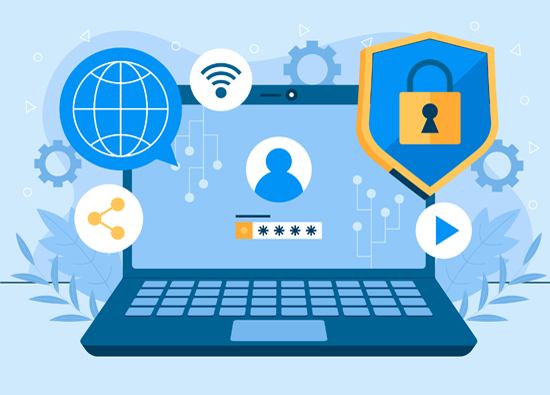
 Passwords are the first line of defense in the digital world, but many people believe that 'hackers won't find me' and underestimate the importance of passwords. According to statistics, over 60% of people worldwide use weak passwords, allowing hackers to crack a user's account within seconds and even gain control of personal information, bank accounts, and social media platforms. If '123456', 'password', and 'qwerty' are your passwords, be careful, you may have become a target of hackers without realizing it. This issue of "Information Network" breaks the public's misconception about passwords and provides the most practical strong password protection techniques.
How easily can passwords be cracked?
Many people think that setting a slightly longer password can prevent hackers from breaking through, but this is not the case. According to a 2024 study by Hive Systems, an information technology company, hackers can crack an 8-digit password in just 37 seconds. They have multiple methods to crack passwords, such as dictionary attacks that use pre-set word libraries to test common passwords. Easy to guess combinations like "password123" or "iloveyou" can be cracked almost instantly; Another common technique is collision attacks, as many users are accustomed to using the same password on different websites. When hackers obtain the password information of a certain website, they will attempt to log in to other platforms with the same password. In addition, hackers will also resort to brute force cracking, using automated tools to try all possible password combinations, especially simple passwords with less than 6 digits, and successfully invade within seconds.
What is a 'strong password'?
People often say to use a 'strong password', but what are the standards for a strong password? According to Hive Systems research, a truly secure password should contain at least 12-16 characters, especially a 16 character password that may take hundreds of years to crack. In addition, the key to setting a strong password must also mix uppercase and lowercase letters, numbers, and special symbols to increase diversity and complexity, such as "D # 9t! gH5k@zQp1 This random combination can significantly enhance the security of passwords. It is worth noting that passwords should not contain personal information such as birthday, phone number, or family name to avoid being inferred by others. Another important principle is that different accounts or platforms should use different passwords, so that even if one set of passwords is cracked, other accounts can still remain secure.
How to protect your password?
Just using strong passwords is not enough, more comprehensive security measures are needed to ensure account security. The following 5 steps can effectively reduce the risk of password theft:
1. Enable two factor authentication (2FA): Even if hackers obtain your password, they cannot log in to your account without obtaining verification code authentication. It is recommended to use services such as Google Authenticator or Microsoft Authenticator, which are more secure than SMS authentication.
2. Regularly replace and monitor password strength: Regularly updating passwords is a necessary habit, especially when there is suspicion of password leakage, it is necessary to replace them immediately. It is recommended to use tools such as secure.org to test the strength and cracking time of passwords, and based on the results, increase the complexity of passwords to enhance security.
3. Be vigilant and prevent phishing scams: Hackers often lure people into entering passwords through disguised emails, text messages, or websites. Therefore, before clicking on links or entering account information, be sure to confirm the sender's identity and the authenticity of the website to avoid falling into fraud traps.
4. Pay attention to network connection security: Public Wi Fi is one of the most commonly used channels by hackers to steal login information, and should be used with extra caution. If it is necessary to log in to important accounts in public places, it is recommended to use VPN services or switch to mobile networks to reduce the risk of information theft.
How to Remember Strong Passwords?
One of the reasons why many people are unwilling to use strong passwords is because they are worried that they will be difficult to remember. In fact, with some skills, it is easy to remember strong passwords.
1. Simple memorization method: Convert a meaningful phrase into a password, for example, "This is my strong password 2025!" can be converted into "T! SS1sMy $torngPWD2025!", making the password both powerful and memorable.
2. Establish password rules and set regular changes for different accounts: By changing in a fixed format, ensure that each account's password is unique and easy to remember. For example, "Fb! 2025 MySecure" represents Facebook, while "Ig! 2025 MySecure" represents Instagram. You don't need to remember each password completely to maintain its uniqueness and security.
3. Use password management tools: If you want to remember multiple complex passwords, you can use third-party password management tools such as Google Password Manager, 1Password, or LastPass. In addition, Apple's built-in "password" feature is also a convenient option, which can synchronize passwords between Apple devices and automatically suggest strong passwords, helping users easily manage login information.
Password is your digital lifeline
Password security not only affects everyone's digital life, but also involves personal privacy, bank accounts, social media, and even corporate secrets. As hackers' technology continues to improve, our defense awareness must also be raised simultaneously. Check your password strength now, strengthen security measures, and refuse to be the next target of hackers!
*Image source: Freepik
#