
03.2026 Group Briefing
Far EasTone Telecommunication assists in upgrading sustainable transportation in Hsinchu City
Far EasTone Telecommunications / Huang Yihua

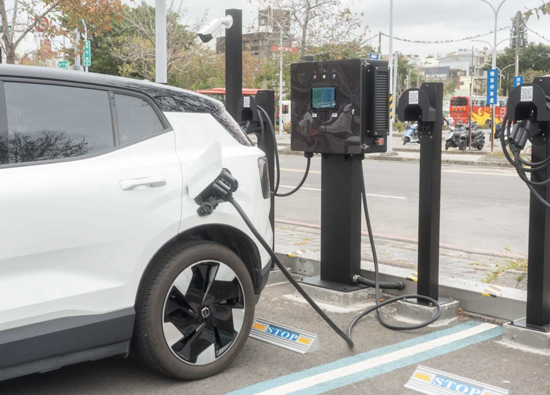
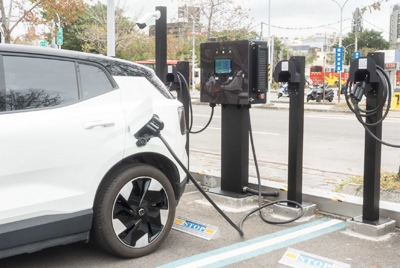 The government of Hsinchu City continues to promote the vision of "smart city" and "sustainable transportation". After the first wave of 66 electric vehicle grids and a total of 73 fast and slow charging devices were put into use in May 2025, the "Second Wave of Public Charging Stations in Hsinchu City" press conference on January 22 announced the expansion of the use of 10 public charging stations, adding 34 slow charging stations, 29 fast charging stations, a total of 63 charging parking spaces, and 76 fast and slow charging stations, all of which will be assisted by Far EasTone Telecommunication to build and maintain, creating one of the highest density and most complete power configuration charging networks in Taiwan, covering the city's democratic life circle and commuting routes, providing convenient and efficient public charging stations. Charging service.
One stop networking facilities and platforms for data decision-making in urban governance
Far EasTone Telecommunication utilizes "Far EasTone Telecommunication Big Data+AI+IoT" technology to independently develop diverse green communication solutions, assisting public sector and corporate partners in implementing low-carbon operations, green transportation, and energy transformation. By the end of 2025, the number of electric vehicles listed in Hsinchu City has reached 3659 and is continuously growing. Far EasTone Telecommunication assists the government of Hsinchu City in laying out public charging facilities in advance, not only meeting the charging needs of citizens, but also making Hsinchu City one of the most friendly cities for electric vehicle charging in Taiwan. At the same time, it combines technology and data to achieve the goal of smart governance, making public charging piles an important infrastructure for smart cities.
Far EasTone Telecommunication's "Smart Charging Service" integrates networked charging stations and platform systems, providing one-stop complete information and real-time management, as well as 24/7 maintenance services. By providing real-time feedback on charging time, electricity consumption, frequency of use, and distribution of charging hotspots, the city government can grasp the usage behavior of electric vehicles. This information can serve as an important reference for future charging facility site selection, transportation route planning, electricity dispatch, and smart transportation development, enabling urban governance to move towards data-driven decision-making.
Multi power configuration, nearly half fast charging to meet various electricity needs
The scope of this opening covers 10 public areas including the North, East, and Xiangshan districts of Hsinchu City, including: Taixi Flat Parking Lot, Hsinchu Railway Station Back Station (2) Parking Lot, Nanshi Community Parking Lot, Xinzhuang Flat Parking Lot, Baoshan Road 452 Lane Parking Lot, Park Land Bridge Parking Lot, Shibajianshan Parking Lot, Jinshui Park Parking Lot, Sunset Boulevard Parking Lot, and Landscape Bridge Parking Lot. The surrounding area covers diverse living circles such as residential communities, suburban attractions, transportation attractions, and science parks, further enhancing the convenience and accessibility of charging for citizens in daily travel.
Unlike most counties and cities that focus on slow charging, Hsinchu City not only pursues quantity expansion in charging construction, but also attaches more importance to overall efficiency and the rationality of power configuration. The public charging stations built by Far EasTone Telecommunication for Hsinchu City cover four power levels: 7kW, 30kW, 120kW to 180kW. At present, nearly half of the public charging stations in the city are fast charging devices, which can simultaneously meet the diverse needs of monthly rental households for long-term charging and passengers for short-term recharging, improve user convenience, and significantly increase the turnover rate of charging facilities.
Continuously investing in building and expanding low-carbon transportation benefits
Observing the operational data of the first wave of use in Hsinchu City, the overall utilization rate of fast and slow charging devices remains stable, indicating that the city government's planning for charging station types, quantities, and locations has successfully met the actual needs of citizens for car use and charging. Taking the underground parking lot of Yuandao 5 as an example, due to its proximity to hospitals and markets, there is a strong demand for usage, with an average monthly usage rate of 69.4%, which is equivalent to about 17 hours of continuous use per day. The average monthly electricity consumption of each charging gun is 138 kWh. From the perspective of overall benefits, since the first wave of use in May last year, the charging stations in Hsinchu City have provided a total of 56545 degree charging services, equivalent to supporting electric vehicles to travel about 280000 kilometers, bringing substantial benefits to promoting low-carbon transportation and urban sustainability.
In response to the central government's promotion of vehicle electrification and green transportation policies, and towards the goal of net zero carbon emissions, Far EasTone Telecommunication actively expands its public domain "smart charging" map. It has obtained smart charging construction projects in nine major public domains, including public parking lots, public universities, and tourist scenic areas. The number and scale of projects are leading the industry. After completion, the service scope will cover Taoyuan, Hsinchu, Nantou, and Hualien Taitung. Among them, the Hualien Taitung Valley National Scenic Area will also build 12 240kW super fast chargers, demonstrating Far EasTone Telecommunication's forward-looking layout in the field of smart charging services.
#