
05.2026 Cover Story
Oriental Union Chemical Corporation x Ya Tung Ready-Mixed Concrete Corporation Creating zero carbon building materials
Far Eastern Magazine / Editorial Room

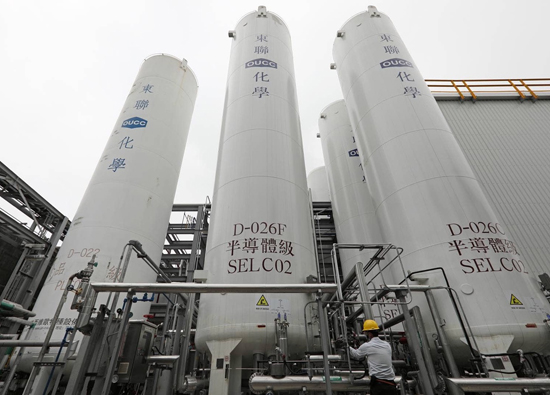
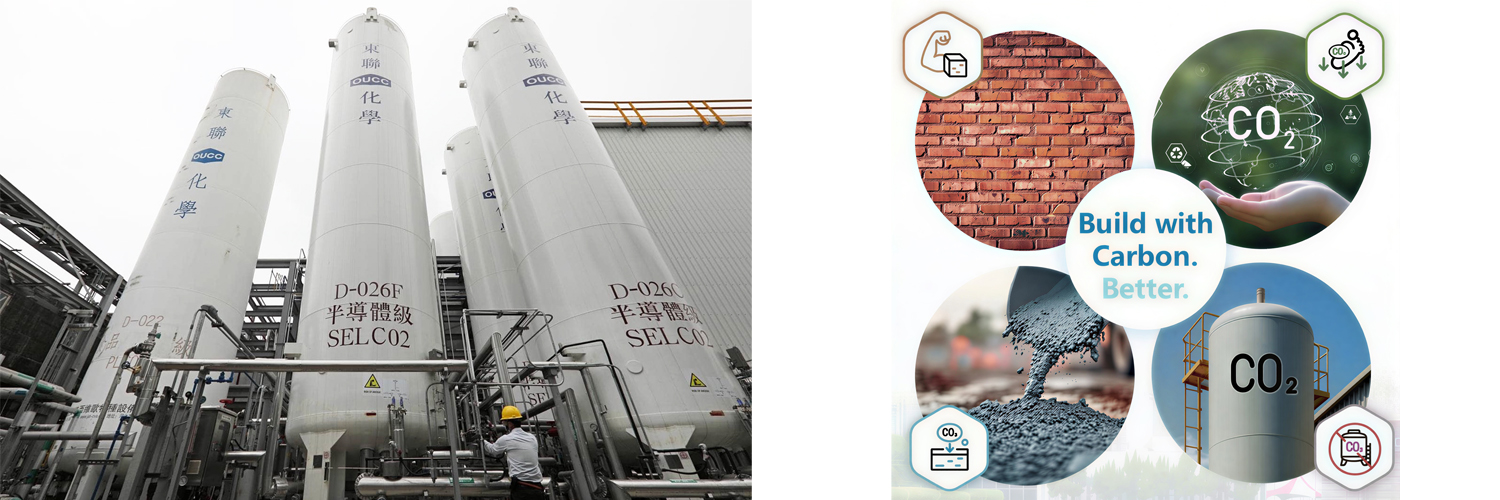 The cement production process belongs to a high carbon emission industry, accounting for about 7% of global greenhouse gas emissions. Therefore, any technology that can reduce clinker demand or accelerate CO2 sequestration has high value. At present, there are no shortage of carbon reduction technologies in the market, but there is a lack of killer low-carbon applications that can be popularized. This issue's "Cover Story" reports on how Oriental Union Chemical Corporation and Ya Tung Ready Mixed Concrete Corporation have identified industry pain points and independently developed low-cost and easy to promote carbon capture chemicals.
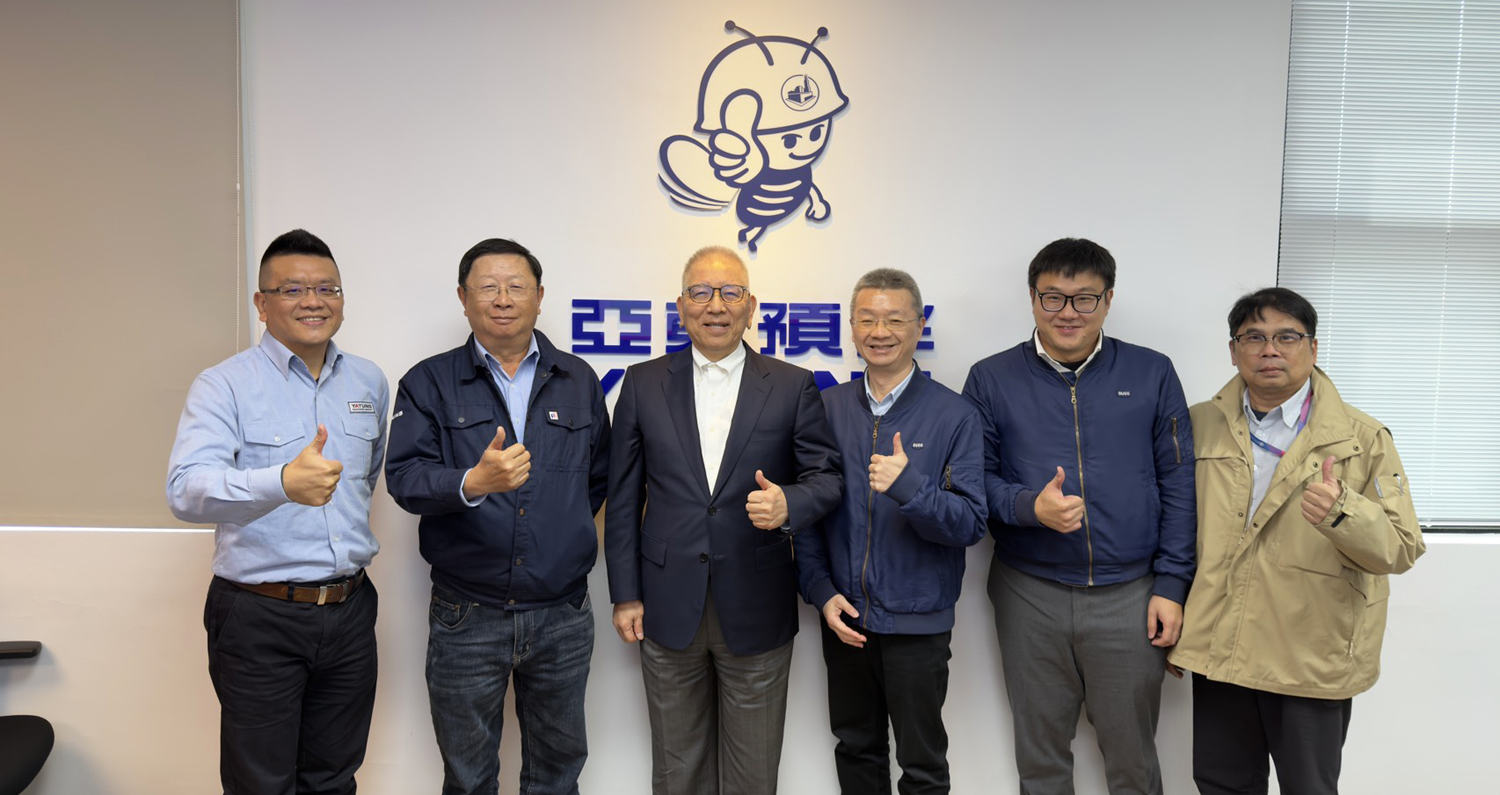 Identifying pain points for cross-border mutual assistance
Global efforts to combat climate change have made carbon reduction an important indicator for corporate competition. One of the current practices in the building materials industry is to inject gaseous CO2 into concrete to enhance material strength and reduce cement usage. Although an average of more than ten kilograms of carbon can be reduced per cubic meter, gaseous CO2 requires a high-pressure, low-temperature storage environment, and strict logistics and management conditions, making it difficult to popularize technology and indirectly limiting the overall carbon reduction scale of the industry.
Oriental Union Chemical Corporation has identified a lack of low-cost, accessible, and easy to manage CO2 utilization technologies in the industry. Meanwhile, Ya Tung Ready Mixed Concrete Corporation, also part of Far Eastern Group, requires more sophisticated concrete mix proportions and more detailed and measurable carbon addition methods to reduce the amount of binder used. Therefore, the two parties have collaborated to launch the Carbon Capture Utilization and Storage (CCUS) project, aiming to break through the bottleneck of traditional CO2 gas utilization and carbon storage, and create a low-carbon building material supply chain.
Steady and steady verification technology
Oriental Union Chemical Corporation plans to combine CO2 utilization technology with Ya Tung Ready Mixed Concrete Corporation's construction waste treatment equipment, bone material grinding equipment, and other resources to jointly introduce CO2 mineralization treatment technology. However, any invention is not a overnight product, and technological innovation requires repeated verification. Therefore, the two companies have specially established a waste carbon sequestration pilot line to test carbon mineralization treatment technology, evaluate carbon benefits, and verify the quality of carbon sequestration stock and recycled bone materials, laying a foundation for scientific research.
Oriental Union Chemical Corporation uses industrial emissions of CO2 as raw material, and through special chemical structure design, synthesizes a formulated chemical agent that has good absorption of CO2. Then, through a patented process, it is converted into a liquid concrete additive that is convenient for transportation. After adding a liquid carrier type agent containing CO ₂ to a cement substrate at room temperature, it can undergo mineralization with mineral raw materials, forming a stable solid state.
Good medicine can only achieve its best effect when taken at the right time. Oriental Union Chemical Corporation and Ya Tung Ready Mixed Concrete Corporation have developed innovative carbon mineralization treatment technologies for different production stages. Firstly, a concrete water reducing agent rich in CO2 is introduced, which can be added during the concrete mixing process to cause mineralization reaction between CO2 in the liquid carrier and fresh concrete, generating crystal nuclei. This can not only improve material strength but also reduce carbon footprint. The agent ratio can also be flexibly adjusted according to manufacturing needs. More conveniently, personnel can operate it in the same way as adding conventional water reducing agents without the need for additional equipment.
.jpg) Carbon sequestration closed-loop resource regeneration
Carbon sequestration closed-loop resource regenerationIn addition to changing the production genes of fresh concrete, this technological innovation also extends the research and development tentacles to the most difficult waste disposal in the construction industry, especially the waste concrete generated from demolishing buildings and the slag generated from steel plants every year, which are significant environmental burdens. Oriental Union Chemical Corporation believes that these seemingly insignificant waste materials actually contain a large amount of active calcium (Ca) and magnesium (Mg), which are equivalent to "unused natural carbon sink reaction beds". If liquid chemical agents can be used to quickly initiate mineralization, it can reduce stacking risks, improve material regeneration quality, and create tradable carbon sequestration.
After repeated experimental adjustments, Oriental Union Chemical Corporation pioneered a CO2 rich mineralization and storage agent that can be added to construction waste, waste concrete, steel slag, incineration bottom slag, or other industrial by-products to promote mineralization reactions, generate stable carbonates, and dry to form recycled materials, including recycled aggregates, stabilized fillers, or low-carbon binder components. It can also reduce the expansion of recycled aggregates and improve material quality. More importantly, the form of liquid agents can simplify factory operations and equipment conditions, lower the threshold for application, and form a full chain carbon reduction loop of "emission source material manufacturing waste treatment" with raw materials taken from industrial CO2 emissions. At the same time, through CO2 mineralization and storage and sludge reduction, dual carbon reduction can be achieved, realizing the reuse of CO2 and waste resources.
Efficient carbon reduction achieves multiple benefits at once
The cooperation between Oriental Union Chemical Corporation and Ya Tung Ready Mixed Concrete Corporation has achieved remarkable results. In terms of fresh concrete, adding a concrete water reducer rich in CO2 per cubic foot of concrete can internally store 0.5 kilograms of CO2 equivalent. If it promotes the reduction of cementitious materials, the total carbon reduction can be more than ten kilograms, and the cement consumption can also be reduced by about 5%. As for waste materials such as steel slag and waste concrete powder, after treatment with CO2 rich mineralized storage agents, 50-100 kilograms of CO2 can be stored per ton (depending on the activity of the raw materials and reaction conditions).
Not only is CO2 mineralization technology environmentally friendly, but it also helps maintain the freshness of concrete, improve material strength and quality, and reduce the amount of bonding materials, thereby saving material costs and improving gross profit for enterprises. Steel slag and waste concrete, which originally required payment for processing, can also be sold externally after being converted into recycled aggregates, and even combined with carbon rights benefits, increase revenue. In addition, when introducing liquid formula, the existing additive supply and construction system can be used, which is conducive to quickly promoting the technology to more factories, applying it to different product lines, and expanding the scope of carbon reduction supply chain.
The cross domain technology platform for chemistry and building materials, jointly constructed by Oriental Union Chemical Corporation and Ya Tung Ready Mixed Concrete Corporation, transforms the traditional CO2 utilization technology that requires high-pressure gas conditions into a daily operation that is "as simple as adding additives", solving industry pain points, expanding new business opportunities for enterprises, and establishing a leadership image in the process of net zero carbon emissions in the building materials industry, creating a new era that combines business resilience and environmental friendliness.
#