
06.2026 Group Briefing
Far Eastern Memorial Hospital completes the first clinical trial of live small intestine transplantation in Taiwan
Far Eastern Memorial Hospital / Luo Yiyu

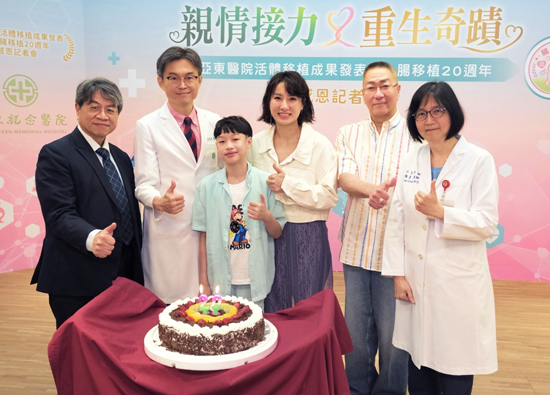
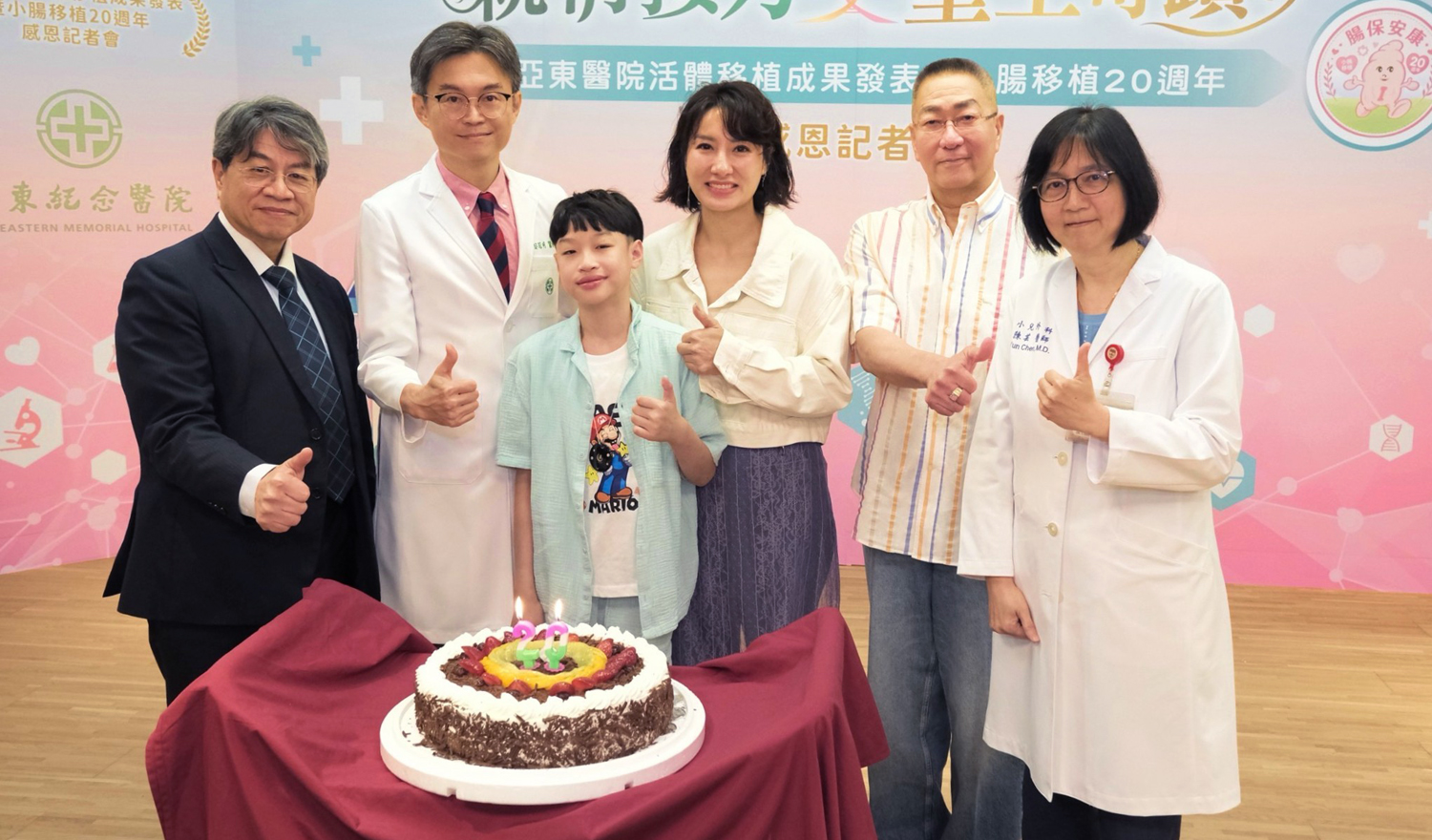 Far Eastern Memorial Hospital has been deeply involved in the field of small intestine transplantation for 20 years. On May 7th, a press conference was held to announce the completion of the clinical human trial of "live small intestine transplantation" in February this year, becoming the first medical center in Taiwan to promote this difficult transplantation technology. The survival rates of recipients, donors, and transplants have all reached 100%. This milestone not only relies on the surgical skills of the surgeons, but also on the hospital's strong cross team care capabilities, constructing a comprehensive "integrated care model for intestinal failure".
Since completing the first small intestine transplant in Taiwan in 2007, Far Eastern Memorial Hospital has continuously improved its technology and care system, accumulating 38 brain dead cases of donated small intestine transplants, laying a benchmark for small intestine transplant care in Taiwan. In addition to the visit of Li Mingzhe, the Chairman of the Organ Donation and Transplantation Registration and Patient Self Promotion Center, to pay tribute at the scene, Professor Chen Weizhao, the founding chairman of the Taiwan Society of Venous and Gut Nutrition Medicine, also sent his blessings through a video. Professor Cai Mengkun, the chairman of the Taiwan Society of Transplantation Medicine, also affirmed the achievements of the Oriental Petrochemical (Taiwan) medical team's years of investment, adding a new chapter to the development of live organ transplantation in Taiwan.
Breaking through the dilemma of big love donation, live transplantation becomes the key to rebirth
The small intestine is an important immune organ in the human body. Due to strong rejection reactions and high risk of infection, only about 60 medical centers worldwide have the relevant surgical capabilities. Dr. Chen Yun, Vice President and Program Leader of Far Eastern Memorial Hospital and a pediatric surgeon, pointed out that every year in Taiwan, there are over a hundred patients with intestinal failure caused by short bowel syndrome or congenital diseases who rely on total parenteral nutrition (TPN) for long-term survival and are prone to sepsis and liver failure. For the past 20 years, the core goal of the team has always been to help patients with intestinal failure "regain normal eating and return to normal life". However, the sources of organ donation from Da Ai are limited, and there are still patients who have passed away due to long waiting times, with over 60% of those waiting being children under the age of 5, and the risk of death is extremely high. Therefore, Far Eastern Memorial Hospital has launched clinical trials of live small intestine transplantation since 2021, transitioning from "passive organ waiting" to a new stage of "active treatment and immediate intervention", opening up new options for immediate treatment for children and high-risk patients.
Three major achievements highlight the comprehensive improvement of treatment effectiveness
The Far Eastern Memorial Hospital small intestine transplantation team integrates general surgery, cardiovascular surgery, pediatric and adult gastroenterology, hepatobiliary transplantation, immunology, psychiatry, imaging medicine, pathologists, pharmacists, nutritionists, social workers, and nurses to establish a complete "integrated care model for intestinal failure". The services cover preoperative assessment, surgical reconstruction, postoperative rejection monitoring, and complication management, and can handle complex problems in real time. Through the regulation of immunosuppressants and intensive monitoring, some cases were able to maintain low-dose immunosuppression 24 weeks after surgery without experiencing rejection reactions, effectively reducing the risk of infection and renal function damage. The overall results were better than the international average.
In this clinical trial, a total of 3 pairs of live small intestine transplantation surgeries were completed, and the overall results showed high clinical safety and treatment breakthroughs, including three key points:
1. Excellent surgical and survival outcomes: The survival rates of recipients, donors, and transplants all reached 100%, indicating a mature and stable surgical process and postoperative care system.
2. Successful reconstruction of intestinal function: All recipients successfully withdrew from total parenteral nutrition (TPN) and resumed oral feeding, indicating substantial reconstruction of intestinal absorption function and significant improvement in quality of life.
3. Breakthrough the bottleneck of pediatric treatment: Successfully assisted 1-year-old and 10-year-old children in completing transplants, breaking through the high risk of death limit of children waiting for organs for a long time in the past.
The relay of family affection witnesses rebirth, and mothers and siblings light up hope for life
Among the patients attending the event, there is an 11 year old boy surnamed Gan from Hong Kong. Due to short bowel syndrome complicated with severe liver disease, he has been shuttling between the ward and treatment for a long time since childhood. His mother chose to cross the sea to Taiwan for treatment and donated 200 centimeters of small intestine to help the child overcome the disease restrictions. Although the boy faced infection challenges after surgery, he has successfully recovered and returned to school after being cared for by the medical team.
Another 41 year old Miss Yang, due to short bowel syndrome, has long relied on intravenous nutrition and repeatedly contracted infections, greatly affecting her quality of life. My younger sister has decided to donate 150 centimeters of her small intestine to assist her sister in rebuilding her life. Miss Yang recovered smoothly after the surgery, successfully weaned off the catheter treatment, and gradually resumed normal diet. The sister also returned to being able to eat together and share daily life.
Showcasing medical strength and creating a new model of comprehensive care for intestinal failure
Coinciding with the 45th anniversary of Far Eastern Memorial Hospital and the 20th anniversary of small intestine transplantation, the successful clinical trial of live small intestine transplantation not only demonstrates the team's long-term efforts, but also proves that the hospital has the clinical strength of a national medical center and international standards. Dr. Chiu, Dean Kuanming, stated that this is not only a technological breakthrough, but also represents the evolution of the overall care model, allowing patients with intestinal failure to see new treatment possibilities. In the future, we will continue to promote the "Comprehensive Care Plan for Intestinal Failure" to assist patients in embracing a new life.
#