

07.2026 Office Talk
Strategies for Risk Management of Enterprises in Preventing Financial Fraud
Oriental Securities Corporation / provided

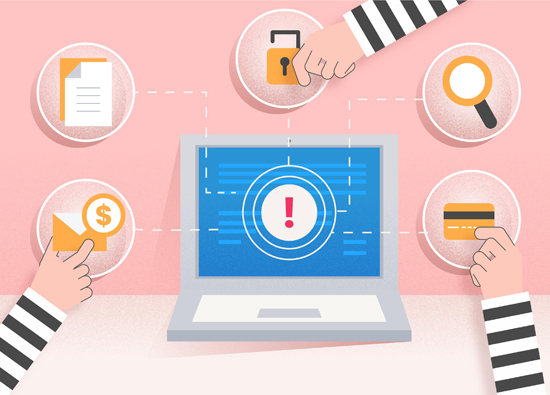
 According to the latest statistics, although the total number of fraud cases in Taiwan has decreased by about 20% in 2025, the annual financial losses still reach nearly NTD 90 billion, indicating that the risk of fraud has not substantially decreased, but has instead shifted towards "high single amount and precise deception". In other words, the fraud mode has shifted from the past "winning by quantity" to an operation mode guided by success rate and amount. What impact will this structural change bring? How should enterprises respond?
Structural transformation of fraud risk
The endless stream of fraud cases is not only a security issue, but also an important source of risk in the process of enterprise operation and customer interaction. For the financial industry, this transformation directly affects account and transaction management; For general enterprises, it may affect customer trust, transaction security, and brand reputation. Therefore, anti fraud thinking should not be limited to passive response to individual cases, but should be upgraded to an integrated management issue that covers information disclosure, source control, and fund flow monitoring, and incorporated into daily operations and overall risk management framework.
With digital platforms and communication tools becoming the main medium, the risk exposure points of enterprises have also extended from relatively fixed operational processes or physical channels in the past to various digital touchpoints and transaction links, making fraud more widespread and instantaneous.
The fraud scenarios faced by enterprises
Although different industries have different operating models, fraud risks can still be classified into several common scenarios, and are mostly concentrated in key links such as funds, information, and customer interaction.
Transactional risk: such as fake transactions, payment fraud, or account fraud, commonly found in retail, e-commerce, and manufacturing supply chains.
Information based risks: phishing emails, fake supervisor instructions, or internal account intrusions that affect business decision-making and operational processes.
Customer risk: such as fake investments, fake customer service, or fraudulent messages, affecting customer rights and brand trust, often occurring in the financial, telecommunications, and service industries.
From compliance to proactive management
Enterprises not only need to comply with basic regulations, but also have the ability to identify and respond to risks in real time. Taking transaction monitoring and abnormal behavior analysis as an example, risk management should be upgraded from "single transaction verification" to "overall behavior interpretation". If we still rely on fixed rules or prior review, it will be difficult to effectively respond to new forms of fraud.
In addition, given the increasing number of external notifications and diverse information sources, how to transform these scattered information into usable risk signals and integrate them into internal decision-making processes has also become an important issue in enterprise management.
The transformation of risk management practices
Taking financial institutions as an example, anti fraud strategies have gradually extended from traditional "Know Your Customer (KYC)" as the core to "Know Your Transaction (KYT)" and behavior monitoring. The underlying reflection is that fraudulent behavior often occurs during the transaction process, rather than simply being a customer identity.
The management logic of this transformation also has reference significance for most enterprises, that is, risk control should not be limited to pre review, but should be extended to continuous monitoring of the transaction process and behavior. The practical approach includes strengthening abnormal behavior and transaction detection, establishing a graded risk control mechanism, and introducing real-time blocking or delayed processing procedures, with the core of improving the timeliness and accuracy of risk identification while also considering operational efficiency.
The trend of fraud prevention under the development of technology
Although fraud methods continue to evolve, fortunately technology tools can serve as an important support for preventing fraud. Including AI anomaly detection, Big Data analysis, and related privacy enhancement technologies, they are gradually being applied in the field of enterprise risk management. Compared to relying on manual judgment and fixed rules in the past, now based on model analysis and prediction, it helps to improve the ability to identify unknown risks. At the same time, some emerging mechanisms are gradually developing, which can advance risk identification before transactions occur, reducing the probability of erroneous transactions and fraud.
Key points for enterprises to cope with fraud risks
In the current environment, enterprises can strengthen their risk management capabilities from the following three aspects:
1. Incorporate fraud prevention into the overall risk management framework: shift from individual case handling to institutionalized management, making fraud prevention a part of daily operations.
2. Strengthen the monitoring mechanism for trading and interaction processes: In addition to pre review, attention should also be paid to abnormal signs in trading behavior and customer interaction.
3. Enhance internal risk awareness and cross departmental collaboration: Reduce the risks caused by information gaps through education, training, and information flow.
Faced with the trend of high value and precision fraud, enterprises need to actively integrate systems, processes, and technology to establish risk control mechanisms with real-time identification and response capabilities. Only by internalizing fraud prevention as a part of daily management can we maintain stable development in a changing environment.
*Image source: freepik
#