

07.2026 Life Guide
Early local correction improves the germination disorder of incisors
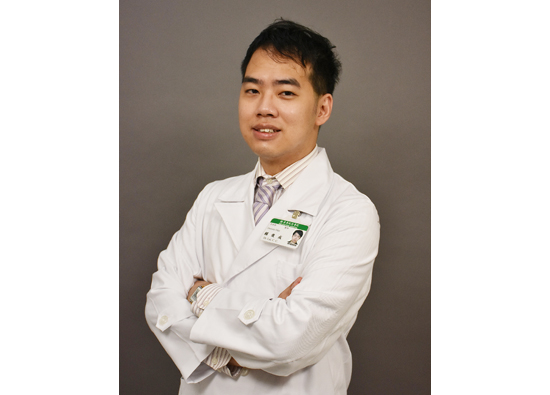
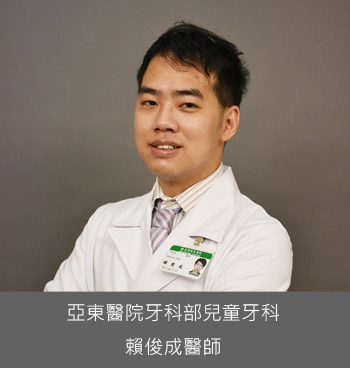
Dr. Lai Juncheng, Pediatric Dentistry, Far Eastern Memorial Hospital Dental Department /

 During the process of changing teeth in children, whether the front teeth can sprout smoothly is often one of the most concerning issues for parents. Some children's teeth may not grow out for a long time, which is not necessarily due to slow development, but may also be hindered during the germination process. This issue of 'Health Column' introduces the application of early childhood correction and the key to successful treatment through case sharing, hoping that every child can show a confident smile.
Xiao An, who is 7 years and 10 months old, came to the children's dental clinic accompanied by his mother for treatment. Parents said that their child's right incisors have already sprouted, but the left incisors have not moved for a long time. The family has been troubled by this for a long time, and the child is afraid to laugh because of the missing teeth. They hope that doctors can assist in evaluating the condition.
Obstacle to incisor germination
Generally speaking, the central incisors on the upper jaw germinate between the ages of 7 and 9. If one side of the incisors has germinated for more than 6 months and the other side has not yet germinated, it is suspected that there is a germination disorder. After clinical examination, it was confirmed that Xiao'an belongs to a typical case of incisor germination disorder. However, the facial proportions are generally normal, and there is no evidence of underdevelopment in the middle face. The position of the upper and lower lips is also close to the ideal state, and the appearance of the side face is natural. The overall facial development is within the normal range.
There are many reasons why incisors cannot germinate, including supernumerary teeth (about 42-62%), severe tooth misalignment, cysts or dental tumors causing obstruction, non shedding deciduous teeth, bent or adhered root, and excessive gingival or periodontal tissue. After oral examination and imaging evaluation, it was found that there is a dental tumor below the left upper central incisor of Xiao An, which hinders the normal path of tooth germination and is a local pathological factor. In addition, spatial analysis shows that there is only about 8 millimeters of space in the left maxillary incisor area, while the germination of the central incisor requires at least 9 millimeters of space. Therefore, insufficient space is also one of the important factors that prevent smooth germination.
The physician suggests taking a dental stereo tomography scan to confirm its location. After general anesthesia, the tooth tumor should be removed and local correction should be used to increase the space for germination. Then, observe for another year and wait for the permanent teeth to automatically germinate. Unfortunately, after removing the tooth tumor and increasing the space, Xiao'an's upper left incisor still did not automatically germinate. Therefore, after discussing with the parents, the physician decided to adopt a more proactive combination of corrective and surgical treatment.
Closed germination surgery
In this case, due to the deep position of the obstructed left upper front tooth, the physician used a "closed eruption surgery" combined with corrective treatment. According to research, closed type germination surgery has better gingival height, periodontal tissue, and pulp status; The teeth undergoing open germination surgery will have longer crowns and less bone support. During the surgery, the physician opens the gum and attaches a stainless steel chain to the surface of the upper left incisor, connecting it to the main line inside the mouth. The gum is then repositioned and sutured, and a orthodontic appliance is used to apply gentle force continuously, gradually moving the teeth downwards.
After the teeth sprout, doctors further use different orthodontic techniques to adjust the position and angle of the teeth. During the treatment process, a nickel titanium alloy steel wire with a smaller diameter is initially arranged, and then stainless steel wire is used to provide more stable control force. In addition, a "dual force system" is used to simultaneously apply the force of the main steel wire and auxiliary steel wire, so that the left upper incisor can maintain a good angle and direction while being pulled out. Finally, perform gum restoration to make the teeth appear more natural.
After the treatment was completed, Xiao'an's front teeth sprouted smoothly, arranged neatly and naturally, with stable bite relationship. The appearance showed very rich keratinized gums and bones, which satisfied both the parents and Xiao'an himself.
Advice from Children's Dentists
Early orthodontic treatment for children is usually obstructive orthodontics, aimed at taking advantage of the mixed dentition stage (around 7 to 11 years old) and utilizing the plasticity of bone development to intervene in the growth of teeth and jawbone as early as possible, rather than requiring perfect alignment of teeth angles and the relationship between upper and lower jaws as in adult orthodontics.
In addition to sprouting disorders, early childhood correction issues that dentists can address include guiding jawbone growth, improving anterior/posterior malocclusion (to avoid tilting of the upper and lower jaws), severe overbite/deep bite (to reduce the risk of anterior tooth injury), expanding dental arches to create enough space for permanent teeth to sprout, or correcting bad oral habits to prevent deformation of the jawbone due to force.
However, due to the fact that corrective treatment usually takes 1.5 to 2 years, discomfort may accompany the process. If the condition is complex, traditional corrective devices need to be used, and maintaining oral hygiene is relatively difficult. Therefore, the key to success not only depends on the medical plan, but also on the patient's own good treatment cognition and intrinsic motivation, willing to actively and continuously cooperate with daily cleaning and follow-up adjustments; At the same time, it is necessary to rely on the patient companionship and encouragement of parents, as well as the professional guidance and close tracking of the medical team, and the cooperation of the three parties to achieve the best treatment effect.
Summer vacation is the peak period for children's dental treatment, as well as an important time to check the condition of their front teeth early and seize the golden opportunity for correction. The dental team at Far Eastern Memorial Hospital looks forward to working together with parents to ensure that every child has healthy and neat teeth, a confident and radiant smile, and can fearlessly showcase themselves on the path of growth.
*Dr. Lai Juncheng's expertise includes pediatric dentistry, adolescent orthodontics, and restorative dentistry. More information: https://www.femh.org.tw/section/sectionDetail2.aspx?CID=0270&DoctorID=97198
#