
07.2025 Group Briefing
U-Ming Marine Transport holds its 2025 shareholders' meeting
U-Ming Marine Transport / Huang Yizhen

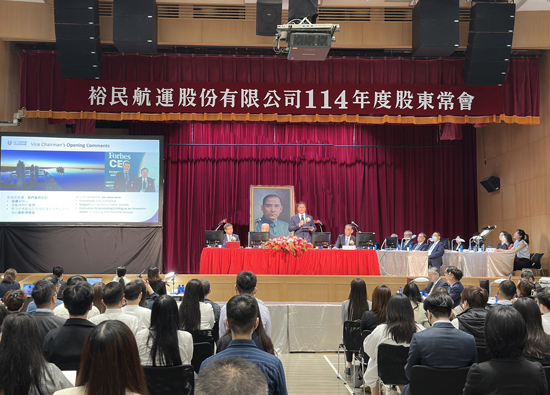
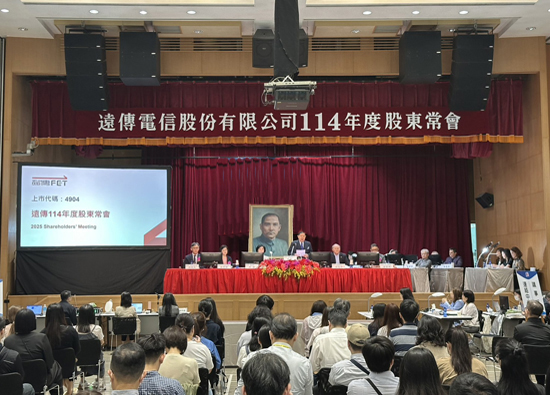
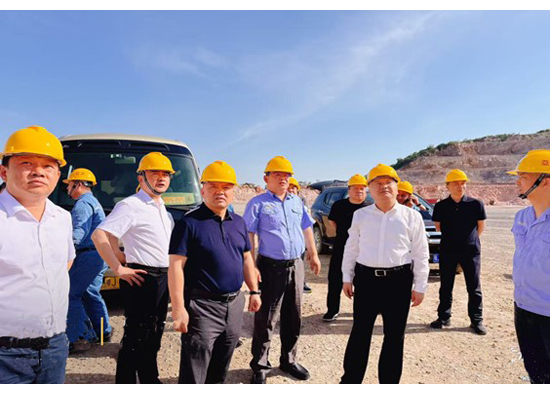
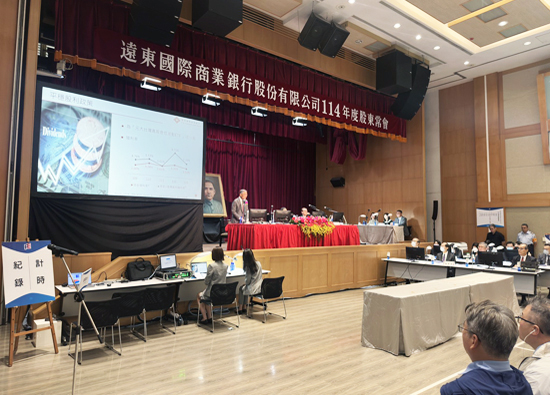
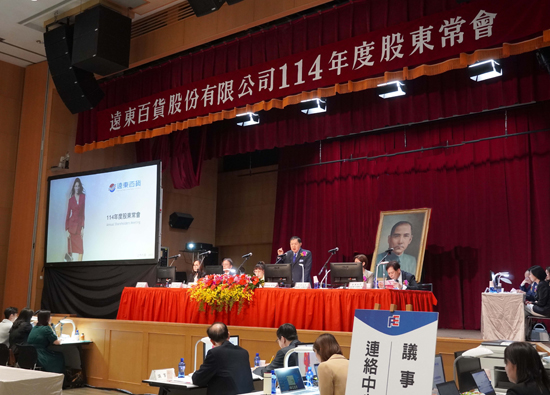
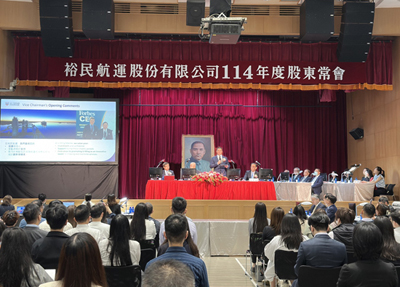 U-Ming Marine Transport held its shareholders' meeting on May 27th, during which it approved its 2024 financial report, dividend policy, and the election of the 20th board of directors. In 2024, the consolidated revenue was NTD 16.343 billion, the net profit after tax was NTD 4.681 billion, and the earnings per share reached NTD 5.54. The cash dividend of NTD 3.2 per share is distributed, continuing the high dividend policy and demonstrating the commitment to returning to shareholders under a stable financial structure. As of now, U-Ming Marine Transport has accumulated undistributed earnings and statutory surplus reserves totaling NTD 20.018 billion, equivalent to NTD 23.69 per share of distributable earnings, laying a solid foundation for stable interest distribution. Vice Chairman Xu Guoan emphasized during the meeting that U-Ming Marine Transport will continue to focus on net zero transformation and global layout, and will strengthen operational resilience and capital return to create sustainable long-term returns for shareholders.
Showcasing operational resilience in response to global changes
Against the backdrop of ongoing global political and economic turbulence, U-Ming Marine Transport has demonstrated outstanding resilience and flexible adaptability. According to the latest forecast by the International Monetary Fund (IMF), the global economic growth rate in 2025 has been revised down from the original estimate of 3.3% to 2.8%; Clarksons data also shows that the global sea freight trade has a growth rate of -0.4% per ton per nautical mile, reflecting weak demand for dry bulk cargo and limited coal transportation due to carbon reduction trends.
However, steel demand still has supporting momentum. The World Steel Association estimates that global steel demand will increase by 1.2% annually by 2025, mainly driven by infrastructure and urbanization in emerging markets. The Simandou iron mine in Guinea, Africa, has started production in 2025 and is expected to have a production capacity of 120 million tons by 2027; Brazilian mining company Vale also plans to increase its annual iron ore production from 320 million tons to over 360 million tons by 2030, injecting stable demand into the cape type ship market.
On the supply side, it is relatively tight. The new ship order rate and fleet growth rate are only 10% and 3%, respectively, at historical lows. In addition, over 25% of active ships are over 15 years old, and driven by decarbonization regulations, the pace of replacing old ships with new ones will accelerate. Since 2016, the global average ship speed has decreased by about 8%, effectively suppressing the growth of total capacity. Overall, the supply and demand structure is gradually improving, and the future outlook is relatively optimistic.
Despite a significant decline in BDI and daily rental rates for major ship types in the first quarter of 2025, Clarksons estimates that the demand for dry bulk cargo for the whole year will only grow slightly by 0.1%. U-Ming Marine Transport, with its efficient fleet operation and flexible allocation of spot/long-term contracts, continues to maintain stable capacity and profitability, and actively expands into growth potential commodities such as bauxite and fertilizers to enhance market competitiveness.
In response to short-term uncertainties such as trade restrictions between China and the United States, proposed port fees in the United States, the Red Sea crisis, and extended energy transportation distances, U-Ming Marine Transport has adopted a cautious response strategy. By locking in costs through long-term fuel contracts and incorporating carbon strategies into operational decisions, it effectively manages the risks brought by oil price fluctuations and environmental regulations, and continues to sail steadily in the global changing situation.
Dual track green transformation and innovative transformation layout for the future
U-Ming Marine Transport actively promotes low-carbon shipping and smart transformation. Since 2024, it has delivered three extreme flexible bulk carriers and one new cement ship, all of which have energy efficiency better than the IMO Phase III standard; An additional 11 new ship orders have been signed (6 Extreme Handy, 4 Cape, and 1 LNG carrier), which will be delivered gradually starting from 2026. By the first quarter of 2025, 94% of the fleet will be environmentally friendly and energy-efficient ships, with an average age of only 6.8 years, significantly better than the market average of 12.6 years.
To further strengthen the management of smart fleets, U-Ming Marine Transport took the lead in introducing rotor sails to VLOC, using wind assisted navigation to reduce carbon emissions, which is the first of its kind in Taiwan. In addition to low-carbon shipping, U-Ming Marine Transport has also ventured into clean energy transportation, partnering with Kawasaki Steamship to jointly develop LNG transportation business. Through its subsidiary U-Ming Marine Transport Wind Energy Shipping, it has expanded from personnel transportation (CTV) to maintenance vessels (SOV), deepening its energy and service scope in the offshore wind power market.
Deepening ESG practices to become a sustainable model for industries
U-Ming Marine Transport is committed to sustainability development and was once again selected for the FTSE Social Responsibility Emerging Markets Index and the Taiwan Sustainability Index Constant Stock in 2024. It was also awarded the Taiwan Corporate Sustainability Award (TCSA) for its "Top 100 Sustainability Model Enterprises" and "Platinum Report Award". In the same year, it was also awarded three honors by the Department of Transport, namely "Outstanding Performance in Expanding Fleet", "Outstanding Performance in Developing Green Shipping", and "Outstanding Performance in Supporting Maritime Training", and won the first ESG Transportation Sustainability Award Gold Award. In addition, U-Ming Marine Transport has won multiple awards from HR Asia, including the "Best Employer in Asia Award" and the "Workplace Sustainability Award", showcasing U-Ming Marine Transport's corporate culture of valuing employee care and diversity. In September 2024, U-Ming Marine Transport released the first Task Force on Climate related Financial Disclosures (TCFD) report for Taiwan's shipping industry, which aims to strengthen investors' awareness of climate risks through transparent disclosure and construct a more solid sustainable governance framework.
Diversified fleet size and layout
At present, U-Ming Marine Transport operates 9 types of ships including Capesize, Panamax, Ultramax, Post Panamax, cement specialist ships, VLCC, VLOC, CTV, and LNG transport ships. The fleet size reaches 82 ships with a total load capacity of nearly 10 million tons, and has operating bases in Singapore, Hong Kong, and Xiamen, achieving a global business layout.
Vice Chairman Xu Guoan stated, "U-Ming Marine Transport will focus on 'net zero carbon emissions, intelligent operation, and steady growth' as its main axis, implement capital efficiency and corporate sustainability, and move towards a new generation of modern shipping companies with global competitiveness
#