
11.2025 Office Talk
The transformation of Taiwan's retail competition from channel expansion to comprehensive integration
Group Integrated Efficiency and Retail Planning Headquarters / Group Integrated Efficiency Group

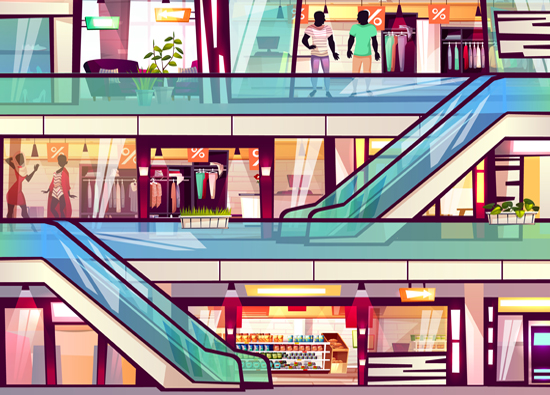
 The digitization of global retail is accelerating, and competition in the ecosystem is intensifying. The Taiwanese market is moving towards a new situation of "big players like Evergrande". Companies are expanding their territory through cross industry mergers and acquisitions, rewriting their market rankings. In recent years, Uni President and Quanlian have promoted their scale advantages through large-scale mergers and acquisitions, while Far Eastern Group Retail has entered the retail industry of department stores, mass retailers, and supermarkets earlier. Although department stores are now the core, with the increasingly blurred industrial boundaries, competition challenges have become more severe. The three major groups are competing for scale, efficiency, and experiential advantages through different strategies, continuously redrawing the retail landscape of Taiwan.
The retail market in Taiwan is entering a competitive stage of "high integration and high efficiency", with a clear trend towards channel concentration. The largest player, Evergrande, is no longer solely relying on a single business model to dominate the market. Instead, it is leveraging cross industry investment, member ecosystems, and supply chain integration to achieve operational efficiency and consolidate market share. In this pattern, the three major retail groups, Uni President Group, Quanlian Industrial, and Far Eastern Group, have become the dominant forces in the market, each responding to the changes in the retail landscape with different strategies.
Unified Group: Diversified Layout and Cross Industry Comprehensive Efficiency
Uni President Group has transformed from its original business of "food" to its own channels, reducing risks and creating synergies through cross industry investment and integration. Its 7-11 has more than 7000 stores in Taiwan, accounting for 50% of the market revenue. It not only supports its own food business, but also drives the surrounding logistics and supply chain to form a huge retail ecosystem. Through the integration of online and offline services by members of the Uniopen Group, even Carrefour is included in the same member system, strengthening the membership economy.
After the acquisition of Carrefour, Uni President will not only make up the gap between "convenient consumption" and "bulk purchase", but also directly introduce food, beverages and daily necessities into Carrefour, reduce costs, increase exposure, expand the benefits of procurement and logistics integration. At the same time, through real estate to support retail businesses, Uni President will build its own logistics and shopping mall space layout to improve operating efficiency. Besides the original 45 small and medium-sized logistics strongholds, it will invest NTD 50 billion to build four large multi-level logistics centers, which are expected to be launched in succession from 2025 to 2028. By mutually supporting retail cash flow and real estate revenue, a positive cycle of assets and funds is formed.
Quanlian: Channel Expansion and Bargaining Power Enhancement
Quanlian started with affordable supermarkets and has about 1100 stores across Taiwan. It has been a leading supermarket for many years, with a market share of over 70%. After the acquisition of RT Mart, its distribution network expanded from community supermarkets to the mass market. After renaming RT Mart to Daquan Lian, it actively integrated membership and welfare points, continued the existing structure, reduced import costs, and accelerated promotion strategies.
The addition of Daquan Lian has enhanced its purchasing advantage in fresh and daily necessities, increased its bargaining power with suppliers, lowered procurement costs and increased gross profit margins, while also attracting more brand collaborations. In terms of logistics layout, Quanlian has also invested NTD 25 billion to build four large-scale logistics centers (totaling 100000 ping), strengthening the last mile of retail layout.
Both Uni President and Quanlian rely on their large economic scale to achieve significant synergies in channel complementarity, procurement scale, membership economy, and logistics efficiency. However, both also face challenges: the fully connected business is highly concentrated in food and fresh produce, lacking high-end layout and limited e-commerce penetration rate; The unified convenience store market is becoming saturated, and it is not easy to break through new formats. Moreover, there is a significant difference in positioning compared to platforms such as PChome and Yahoo Shopping, and the overall effectiveness of cooperation is limited.
Far Eastern Group Retail is a diversified retail industry that combines brand, membership, and cost efficiency
Far Eastern Group Retail began to operate diversified retail across industries earlier, with a layout of mid to high end department stores, middle-class retailers, exquisite supermarkets, and landmark shopping centers. However, contrary to the main force of unity and the entire alliance, Far Eastern Department Stores 、 FE SOGO Department stores 、 Far Eastern Big City Shopping Malls 、 A.Mart Ninety percent of City'Super's revenue is concentrated in department stores, with a low proportion of its own brands, making it difficult to achieve synergy in logistics and supply chain.
From high-end urban products to affordable daily necessities for the general public, the market span is large. Although consumption is stratified, it can reduce dependence on a single group and make cross brand marketing and image coordination difficult. Although it does not have the strong connection of "food retail+digital payment" like unified and fully connected, it still has certain advantages in experiential consumption and cross-border membership.
Far Eastern Group focuses on the value of reusing land resources within the group, utilizing existing assets to promote retail and related businesses. Far Eastern Resources Development has developed and launched its first green building automated logistics center, operated by Arcoa, and provided customized entry solutions for City'Super, coupled with flexible pricing mechanisms to further enhance cost-effectiveness.
HAPPY GO is the retail core asset of Far Eastern Group, which has been continuously building the cornerstone of the group's membership economy for 20 years. Through member data, cross channel marketing, shopping discounts, and other strategies, it promotes consumer circulation and forms a member ecosystem. The "HAPPY GO PAY" mobile payment developed in collaboration with Far Eastern Group Bank seamlessly integrates accumulated points with consumer payments, effectively increasing customer loyalty within the group and maximizing customer lifetime value.
From membership mechanism, payment to online shopping, Far Eastern Group's strategic direction is to share and distribute modules to reduce duplicate costs. Compared with its peers, the penetration and frequency of use of the digital membership ecosystem still need to be strengthened. In the future, if Far Eastern Group can deeply integrate the brand attraction of department stores and shopping centers, HAPPY GO membership OMO ecosystem, and digital infrastructure construction, fully leverage its cross industry resources, and supplement it with digital transformation and self owned e-commerce, Far Eastern Group can still consolidate and enhance its important position in the retail market in Taiwan.
Scale and synergy lead the new retail landscape in Taiwan
The retail market in Taiwan is entering a new era of highly integrated and efficient competition. Uni President and All Union are expanding their procurement scale, logistics efficiency, and membership management through mergers and acquisitions of mass retailers, accelerating their digital layout; Far Eastern Group's retail focuses on high-end experiences and department store advantages, gradually integrating logistics and digital resources to improve cross channel operational efficiency. The three major groups are reshaping their market landscape through strategic synergy, continuously influencing the retail structure and competitive situation in Taiwan. In the face of market challenges and rapid changes, the group's key enterprises should exert flexible innovation and collaborative spirit, transform existing advantages into new driving forces, and work together to build sustainable competitiveness.
*Image source: freepik
#