
12.2025 Office Talk
Key Battle for Petrochemical Midstream Transformation: From Carbon Fee Pressure to Carbon Asset Opportunities
Oriental Union Chemical Corporation / Yu Yingyue


 As the world enters the era of net zero transformation, carbon pricing and carbon emission management are no longer futuristic, but the battlefield of current corporate competition. As an important player in the midstream of Taiwan's petrochemical industry, Oriental Union Chemical Corporation is actively transforming from a "cost controller" to a "carbon asset manager" under the dual pressure of the upcoming implementation of carbon fees and emissions trading (ETS) system. Through strategic arrangements, it strives to gain an advantage in the industry's carbon reduction competition.
The pressure of carbon fee reform is emerging
Oriental Union Chemical Corporation's main products are specialty chemicals, supplying key industries such as textiles, electronics, and building materials. Its operational characteristics are highly dependent on energy. Taking Linyuan Factory as an example, the total carbon emissions in 2024 are about 310000 tons, of which up to 93% are indirect emissions (Scope 2), mainly from electricity and steam use. This energy structure dominated by electricity has made Oriental Union Chemical Corporation a high-risk target under the carbon fee system.
Preliminary calculations show that if calculated at NTD300 per ton, the carbon cost burden for a single year in the future will reach NTD 60 million, accounting for approximately 0.5% of the company's revenue. Although it has not yet caused fatal pressure, it is still enough to change the priority order of capital investment. Oriental Union Chemical Corporation is actively applying for a "voluntary reduction plan" to strive for preferential rates, and the carbon fee is expected to be reduced to below NTD 2 million; If included in the list of "high carbon leakage risk businesses" in the future, there is a greater chance of further reducing it to NTD 5 million.
The carbon fee will not shut down our factories, but it will redefine what is worth investing in, "said the senior management of Oriental Union Chemical Corporation. The real challenge in this transformation war lies not in the carbon fee itself, but in the deep transformation of energy structure and efficiency.
From 'Emission Reduction Costs' to' Carbon Asset Management '
Faced with the introduction of the future ETS system, Oriental Union Chemical Corporation not only regards carbon reduction as a sustainable responsibility, but also gradually transforms it into part of its investment logic. It plans to introduce an internal carbon price (initially set at NTD300 per ton) as the investment benchmark for various energy-saving and process improvement projects to evaluate the return on investment (ROI).
In the short to medium term, Oriental Union Chemical Corporation will prioritize promoting energy efficiency improvement projects, including steam system optimization, thermal integration design, and motor variable frequency control. At the same time, we are actively seeking opportunities for green power procurement, such as T-REC (Renewable Energy Certificate) and Corporate Power Purchase Agreement (CPPA), although there are still price and acquisition barriers for green power supply at the current stage.
It is worth mentioning that as early as 2002, Oriental Union Chemical Corporation introduced carbon capture technology to recycle and purify CO ₂ annually, providing industrial/food/semiconductor grade high-purity CO ₂ and processing it into vinyl carbonate (battery liquid raw material). Although the current carbon capture rate is as high as 90%, it is only reflected in the first category, and the main carbon emissions are still concentrated in the energy end of category two.
Carbon rights restrictions and strategic choices for major carbon emitters
Although Taiwan has launched a carbon rights market, according to the current "Management Measures for Voluntary Greenhouse Gas Reduction Projects", large carbon emitters (with annual emissions exceeding 25000 tons) are not allowed to apply for voluntary carbon reduction rights for their regulated emission sources. This is mainly based on the "additivity principle" to avoid companies obtaining both carbon fee reductions and carbon rights benefits at the same time, resulting in double profits and distortion of the carbon market. Therefore, the current strategic focus of Oriental Union Chemical Corporation is to reduce emissions independently in exchange for lower carbon fees, and purchase carbon credits when necessary to cope with the risk of insufficient quotas in the future. Our role is as buyers in the future carbon market, not sellers. What we should think more about is how to turn buying carbon into strategic asset allocation, "emphasized the internal strategy unit of the company.
Four major demands to create a fair and effective market mechanism
Faced with rapid changes in the policy environment, Oriental Union Chemical Corporation calls on the government to strengthen the following four pillars when designing the ETS mechanism, so that market pressure can be transformed into carbon reduction momentum.
Policy predictability: Publish the transition timeline and quota reduction trajectory from carbon fees to ETS, allowing companies to invest in long-term transformation with peace of mind.
Fairness in quota issuance: Reward early carbon emitters, avoid blindly issuing quotas based on historical emissions, and punish pioneers.
Positive income cycle: The proceeds from carbon fees and quota auctions should be used to establish a climate fund, dedicated to supporting industrial transformation and low-carbon technology research and development.
Effectively aligning with international standards: including CBAM certification integration and linking with the international carbon rights market to avoid double carbon taxes on export industries.
Conclusion: Carbon reduction transformation is not only a competition but also an opportunity
Under the net zero trend, carbon is not just a simple emission, but a new indicator for measuring the value of enterprises. Oriental Union Chemical Corporation is no longer at the starting point on the road to carbon reduction, but in the intermediate acceleration phase. The future competition will not only depend on who ranks lower, but also on who reduces faster, stabilizes, and trades cleverly.
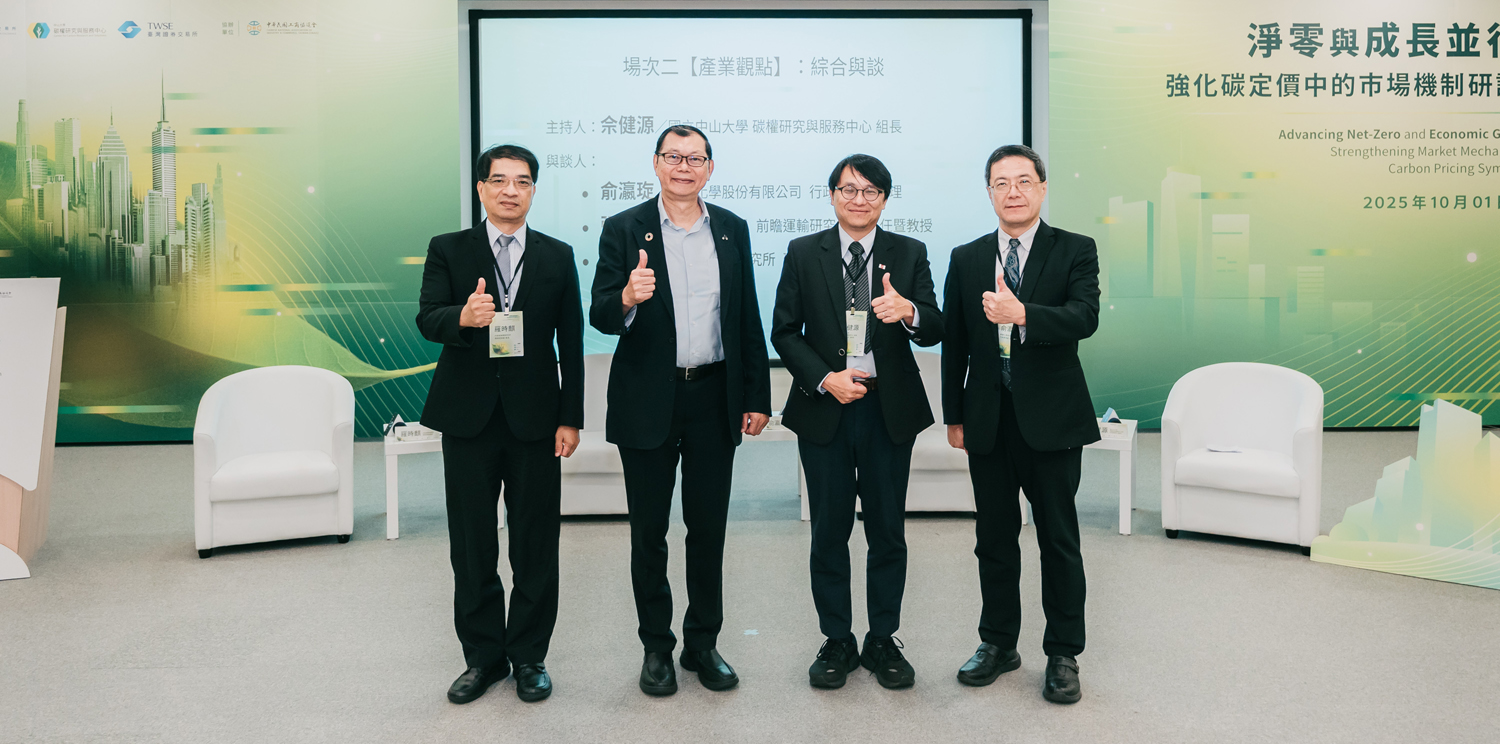
The petrochemical industry is not an enemy of carbon reduction, but rather a strategic node for net zero transformation. If the government and market can provide appropriate tools and incentives, midstream petrochemical companies such as Oriental Union Chemical Corporation will have the ability to become key drivers of low-carbon supply chains. (This article is a documentary of the author's participation in the seminar "Parallel Net Zero and Growth: Strengthening Market Mechanisms in Carbon Pricing")
#