
01.2026 Office Talk
AI empowers the launch of a new era of smart retail
Group Integrated Efficiency and Retail Planning Headquarters / Digital Marketing and Public Relations Group

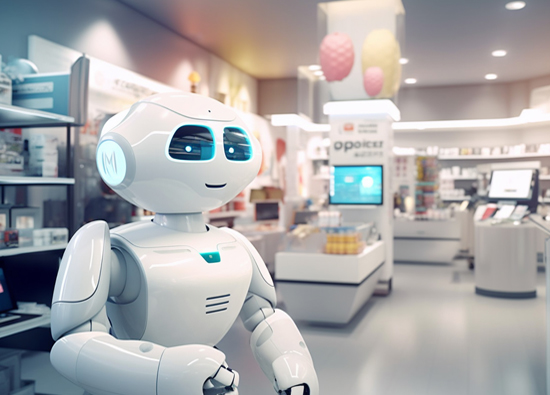
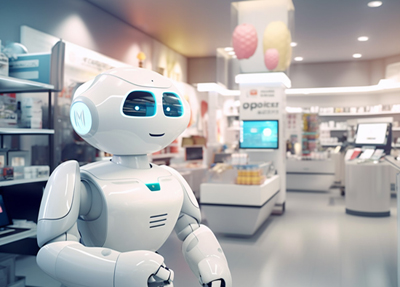 The global economic growth is slowing down, inflation and geopolitical risks continue to rise, and the retail industry is facing multiple pressures such as labor shortages, rising operating costs, and rapid changes in consumer behavior. In this environment, enterprises can no longer simply respond by improving efficiency or reducing costs, but urgently need to reshape their competitiveness through technological innovation. AI is currently transitioning from a 'technical topic' to an 'operational core', becoming a key driving force supporting operational models, enhancing customer experience, and driving enterprise transformation. This article will use actual cases of major global retailers to analyze how AI drives the next stage of retail evolution.
The 2025 APEC Business Leaders Summit pointed out that artificial intelligence technology will enter the stage of "realizing business value" in 2025 after crossing the technology validation stage in 2023 (focusing on the basic knowledge, feasibility, and safety of AI technology) and the active use stage in 2024 (integrating AI into the daily operational processes of enterprises). The conference report also estimates that by 2033, the overall economic benefits created by the introduction of AI into the retail industry will reach up to USD 800 billion.
Global retail transformation with AI as the core driving force
In recent years, the global retail value chain has entered a stage centered on AI technology and data-driven approaches. Through technologies such as real-time data analysis, generative AI, predictive models, and automated decision-making systems (proxy AI), a retail system that can sense, learn quickly, and adjust automatically has been constructed. This not only raises the technological threshold for the retail industry, but also promotes the industry to enter a more capital intensive and technology oriented competitive situation.
In recent years, under the impact of labor shortages, inflation, and supply chain fluctuations, global retailers are no longer just evaluating AI, but are accelerating the introduction and application of AI. AI has also gradually penetrated every scene of retail, from solving manpower gaps and reducing food waste to enhancing customer experience and integrating operational decisions. It has become a core strategy for major retailers to enhance competitiveness and reshape the service and operational models of retail.
Four major application scenarios: AI reshapes the retail value chain
1、 Addressing the manpower gap: Automated store operations
Under the impact of aging and declining birth rates, the retail industry has long faced the dilemma of insufficient manpower. Taking Japan as an example, more than 50% of companies have reported a shortage of full-time staff by 2024, and supermarkets have even shortened their business hours as a result. In order to maintain operational quality, multiple channels are actively introducing AI and automation technology.
Lawson's "Green Lawson" concept store introduces "virtual clerks": remotely controlled by real employees, they can assist in product introduction, identity confirmation, self checkout, and support multiple stores. This model not only reduces the on-site burden, but also allows people with limited mobility or overseas employees to participate in retail services, expanding the source of manpower.
Japan 7-11, FamilyMart Convenience Store uses AI for inventory and replenishment management: AI can predict demand based on sales trends, replenishment cycles, and temperature changes, reducing inventory time by 40% and synchronously reducing store out of stock rates. Some stores have introduced sweeping robots with AI lenses, which not only maintain the environment but also detect out of stock and remind restocking. And the automatic replenishment robot only requires 10% of the past operating time, which is not only more efficient, but also allows store staff to focus on customer service.
2、 Reduce food waste: transform into a 'fruit ripeness appraiser'
AI also plays a key role in the field of sustainability, assisting retailers in achieving the dual goals of "less waste and higher sales", becoming the actual driving force behind ESG strategies.
American retail giant Walmart uses AI to identify the ripeness of agricultural products: employees only need to scan bananas, and the system can determine which ones are close to overripe and provide price adjustment, return or donation suggestions. This not only reduces human judgment errors, but also significantly reduces the amount of fresh food scrap, synchronously improving the transparency of the supply chain.
OneThird avocado maturity detection: Tesco in the UK uses infrared and AI devices to determine the maturity of avocado. After one year, sales increased by 15 million and scrap was significantly reduced. Currently, it has expanded to Belgium, Finland, Germany, and Thailand.
3、 Optimizing shopping list: a more personalized consumer experience
AI elevates the shopping experience from functional to emotional and contextualized, and combines language models with customer data to create a more accurate and thoughtful shopping experience.
Walmart collaborates with Microsoft to launch an AI shopping list: When customers enter the keyword 'football game party', the system can generate a customized purchasing suggestion list, including drinks, snacks, and party decorations. Make shopping not just about searching, but about gaining inspiration, enhancing interactivity and satisfaction.
Carrefour launched AI smart cookbooks and AI sommeliers: AI smart cookbooks can automatically generate menus according to the scenarios and needs entered by customers and guide them to online shopping malls; As for "AI sommeliers", they can recommend the most suitable wine based on meals, budget, and flavor preferences, and provide discount coupons to link online and offline sales.
Japan's Aeon and sake brands have launched an AI sommelier system called "KAORIUM for Sake": it can recommend suitable wines based on flavor or emotional descriptions (such as "youthful sweetness temptation"), making AI guides more user-friendly.
4、 Integrating AI as a Super Agent: A Comprehensive Operations Engine
As AI applications gradually expand, how to avoid tool dispersion and data silos has become a new challenge for major enterprises. Therefore, Walmart has launched the "AI Super Agents" integration plan to create enterprise level AI computing centers, viewing AI as a driving engine for transformation rather than just a single tool.
The four major AI agent frameworks form a complete operational system, including:
Sparky (Gu Ke Duan): Plan parties, recommend products, and generate recipes.
2. Associate: Real time price inquiry, AI scheduling, multilingual translation.
3. Developer: Simplify the development and testing of AI tools.
4. Marty (supplier side): Assist in managing shelving, orders, and advertising.
Winning the Future, Creating AI Driven Retail Core Values
AI is accelerating retail towards a new stage, and future competitiveness does not depend on channel size, but on whether enterprises can establish more agile response speed, more resilient system capabilities, and deeper consumer insights. Retail will also move from a single transaction scenario to an integrated ecosystem interwoven with data, technology, sustainability, and experience.
However, there are still challenges in the transformation process, with most enterprises facing difficulties in integrating dispersed data, long AI investment return cycles, lack of data-driven culture in organizations, and the challenge of balancing personalized services and privacy protection, all of which test the strategic determination and execution ability of enterprises.
AI is the accelerator of this transformation, but the real key to winning lies in whether enterprises can face the pain of transformation, break through organizational inertia, integrate cross domain resources, and deeply integrate technology and operations. Only in this way can we create retail value that is both efficient and humane, innovative and sustainable, and seize the opportunity in this wave of global retail restructuring.
*Image source: freepik
#