
09.2026 Leader's Remarks
How to become a curator of consumer life from product aesthetics to value selection?
FE SOGO Department stores / Sophia C.W. Huang Chairman

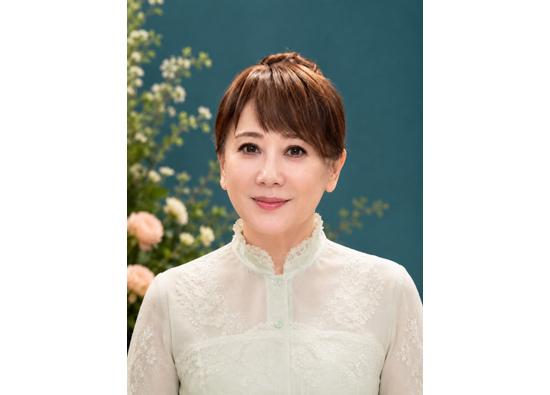
.jpg) The economy has reached a new high, but consumers have not opened their wallets synchronously; The temperature difference in the retail market may not reveal the disappearance of consumer power, but rather the changing definition of 'worth'. How should brands or channels find their position in the face of this transformation? Starting from consumer trends, Sophia C.W. Huang Chairman shares how FE SOGO Department stores are rethinking the role of department stores, from products, spaces, events to membership relationships, to create a consumption scenario that makes consumers feel that "today's time is worth it".
The economy has reached a new high, but consumers have not opened their wallets synchronously; The temperature difference in the retail market may not reveal the disappearance of consumer power, but rather the changing definition of 'worth'. How should brands or channels find their position in the face of this transformation? Starting from consumer trends, Sophia C.W. Huang Chairman shares how FE SOGO Department stores are rethinking the role of department stores, from products, spaces, events to membership relationships, to create a consumption scenario that makes consumers feel that "today's time is worth it"..jpg) Are consumers not buying anymore? 'Worth it' becomes the key to opening a wallet
Are consumers not buying anymore? 'Worth it' becomes the key to opening a walletIn 2025, the Directorate General of Budget, Accounting and Statistics announced that Taiwan's GDP growth rate was 8.68%, setting a 15 year high and surpassing South Korea and Singapore. However, in the same year, the retail industry figures from the Statistics Department of the Ministry of Economic Affairs showed that the annual output value was NTD 48448 billion, a decrease of 0.2%, marking Taiwan's third negative growth in nearly 25 years. The department store industry is more worth pondering, with a growth rate of only 1.43%. After deducting the 1.66% annual growth rate of the consumer price index, it is actually still negative. Externally hot, internally cold, indicating that the heat of the economic boom has not flowed into the consumer market.
It was not until the first half of 2026 that the numbers began to rebound, and the cumulative growth of the retail industry returned to 4.1%. In June, the annual revenue of the department store industry increased by 8.9%. Can this rebound be interpreted as consumers returning? My opinion is that they never left, they were just waiting for a reason worth opening their wallets.
This' worth 'has little to do with price or discount, but rather a new judgment system: quality, experience, emotion, time, are all worth it? The real driving force behind it is that consumers are more aware of what they want than in the past.
In the past, discussing 'worth it' was a comparison in a transaction, for example: Is it worth it to exchange this price for this quality? Today's discussion on 'worth it' is a comparison about life: is this experience worth spending my time on? Is it worth being a part of my life? From what is worth paying for to what is worth choosing.
Rich people spend, poor people save? Mediocrity is the most dangerous position
This new set of criteria can be seen from the widespread discussion of the term 'K-type consumption'. The first reaction of most people to K-type consumption is' those without money save, while those with money continue to spend '; This understanding is only half correct. In fact, K-type consumption is not just a difference between groups, but also occurs within the same person's wallet.
According to the GO SURVEY survey, the same consumer will prioritize retaining their budget for daily purchases, and even upgrade their spending on this expense; He may not hesitate to remove luxury and entertainment budgets while upgrading foreign tourism and health and nutrition consumption.
The same person, the same wallet, makes completely opposite decisions in different categories. Multiple international research institutions have also recorded the same phenomenon in the Asia Pacific market, where caution and extravagance coexist among the same consumer. The fork in the K-shape is not drawn as a line for income, but as a line for whether this matter is worth it or not.
So in today's market, brands willing to pay a premium for high quality can win, and brands that maximize efficiency and CP value can also win. The brands and channels that are squeezed out are those that cannot clearly state which side they are on and are only 'okay'. In other words, mediocrity is the most dangerous position.
Is AI the answer? Recommended prediction preferences, curatorial shaping preferences
To get rid of mediocrity, do we have to rely on the keywords that have been discussed in every forum for the past two years: precision marketing, personalized recommendations AI
AI has indeed entered consumer decision-making. According to NIQ's research, 49% of consumers who use generative AI have received AI recommendations for beauty products. But at the end of the consumer journey, it is still about comparing prices, finding reviews, and then entering physical channels to see and try with one's own eyes, making final confirmations. This confirmation action cannot be replaced by AI. The trust in a brand and a field ultimately depends on the genuine interaction between people and space.
So the question becomes: What is the truly irreplaceable ability of a brand when product information and user reputation are readily available? My answer is curation.
Recommendation predictions preferences. Curse shapes preferences. "Recommendation" can predict consumers' preferences and feed more similar products. Curating "is actively inviting consumers to step into a place they have not yet been to. Curation is never about arranging things beautifully, but about helping consumers establish a set of values that belong to them.
How can brands enter life? Walking into a place where you were never there before
In the past, brands made efforts to increase touchpoints: opening one more counter, investing one more advertisement, and organizing one more event. But will the repurchase rate increase with more touchpoints? Today's consumers often choose a brand because it can help them become their 'ideal self'. In the next decade, a brand that can enter the hearts of consumers must step into a place in their lives where they were originally "without you". Coffee, sports, pets, travel, learning, health, and home are all life scenarios worth serious management.
As of June 2026, the boutique brand Balenciaga has partnered with Barry's, a top fitness center in Los Angeles, to create an immersive fitness space. In addition to high-performance clothing and athletic shoes, Balenciaga also extends the concept of health to diet, providing energy bars and detoxifying juices. Originally just buying a fashionable item, it has become the entrance to a whole healthy lifestyle.
How can retail become a value curator? Four oriented practices
As for the retail industry, holding hundreds of brands, an entire building space, annual schedules, and the most complete membership behavior data, the amount of curation that can be done is certainly another level.
Selfridges in London opened a private membership club called '40 Duke' in April 2026 at their Oxford Street store, which includes one-on-one boutique suites, a 64 seat restaurant and bar, an art gallery curated by Camden Art Centre, and a terrace overlooking the city of London. Its membership threshold is: for every £ 50 spent, you will receive a key; Watching a movie, participating in an event, or having a beauty consultation in the museum can also earn a key. This set of rules not only rewards consumers for spending more money, but also encourages wider participation and deeper interaction.
Selfridges demonstrates bundling product selection, space, activities, and relationships into the same set of rules. Following this line of thought, I have broken down value curation into four aspects:
1. Brand curation, selecting combinations that match consumers' lifestyles.
2. Space curation, making the space a scene that is willing to stay and worth taking photos.
3. Event curation, transforming department stores from "only come when needed" to "come when you have nothing to do" places.
4. Relationship curation, transforming every consumption into a continuously accumulating relationship.
The FE SOGO Department stores are walking the same path. We hope to enable consumers to go from one-stop shopping to one-stop satisfaction. After all, shopping is a task, satisfaction is a feeling. When consumers leave, they should not only take away their shopping bags, but also the feeling of 'spending today's time is worth it'.
Fuxing Store is an example of brand curation. The crowds in the eastern business district have been decreasing year by year, but the performance of the Fuxing store has grown from NTD 6 billion when it opened to nearly NTD 20 billion. Relying not only on introducing good brands, but also on mining insights from CRM data, improving the brand combination of boutique and women's shoe counters, driving 20% growth in performance, and bringing in new customer groups aged 30 to 45.
Zhongxiao Store is a combination of space and event curation. A store that has been around for nearly 40 years is most likely to encounter the problem of aging customer base. In Christmas 2025, we will collaborate with Hong Kong Disneyland to bring the 20th anniversary celebration scene into the Zhongxiao store. The headline under the media is' No need to go abroad to check in Disney scenery ', which also indicates that this curation has turned a department store into a destination that people will regret if they don't come.
And relationship curation is the true asset of FE SOGO Department stores. The SOGO App has over 1.7 million members, and with HAPPY GO's cardholder foundation, it has direct data connections with over 11 million consumers. We use seven major Club groups to maintain these members, which is not only a marketing tool, but also a long-term commitment to companionship: from a baby's first pair of shoes to an elder's birthday gift, FE SOGO Department stores want to participate.
From the perspective of business results, the benefits brought by value curation can also be confirmed. Kantar's BrandZ ten-year study shows that companies with high trust index have a growth rate 115% higher than those with low trust index. Trust does not come from more frequent exposure, it comes from whether you deserve someone to give you a part of their life.
Proactive curation is better than passive marketing
Returning to the question at the beginning of the article: Do consumers no longer want to buy?
In fact, they didn't stop buying it, they just changed a ruler. This ruler measures whether this matter is worth becoming a part of my life, and the price is just a scale on top. When consumers start measuring their choices based on their lives, the answers that brands can provide must also change accordingly. Making, arranging, and selling the goods well, only passed today; What can be left behind are brands that are willing to participate and even help shape the appearance of consumers' lives.
Products are what brands sell. Lives are what great brands help people shape. General brands sell goods, and great brands help people shape the appearance of their lives. The role that FE SOGO Department stores should play is to transition from a venue operator to a value curator of consumer life.
#