

06.2026 Life Guide
New treatment options for chronic pain
Dr. Huang Yuping, Anesthesiology Department, Far Eastern Memorial Hospital /


 The changing lifestyle of modern people has become a concern for many due to prolonged sitting, poor posture, advanced age, obesity, long-term stress, lack of sleep, or chronic pain caused by diseases. In addition to common medications, rehabilitation, or surgical treatments, there have been two new technologies recently that can act on nerves in different ways, affecting the transmission of pain signals. For many people who have been suffering from pain for a long time, this is undoubtedly a great blessing.
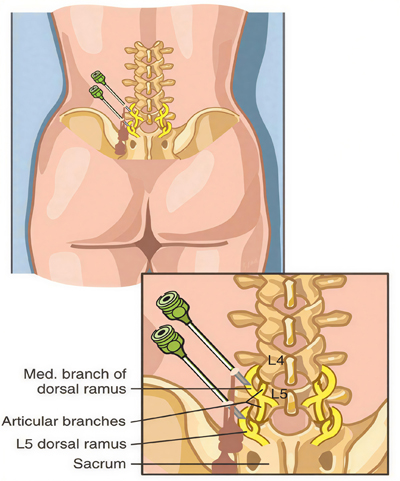 The principle of high-frequency thermocoagulation nerve block/radiofrequency pulse based neural regulation
High frequency thermocoagulation nerve block surgery
Using high-frequency energy to reach a temperature of 80-85 ° C at the treatment site, thereby destroying the small nerves responsible for transmitting pain. Due to the damage to nerve tissue caused by high temperatures, this method is mainly suitable for peripheral nerves and cannot be used for larger nerve fibers, motor nerves, or ganglia to avoid affecting normal function.
Radio frequency pulse based neural regulation
Compared with high-frequency thermocoagulation, pulsed therapy has a lower temperature, approximately between 40-42 ° C, and does not directly damage nerves. Instead, it uses brief pulse currents to selectively passivate pain nerve fibers. Due to the low temperature, the nerves will not suffer permanent damage, resulting in higher safety and fewer side effects. However, multiple treatments may be necessary to achieve optimal results.
treatment process
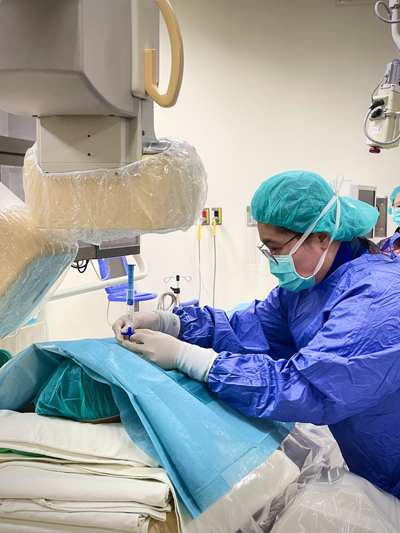 Regardless of whether it is "high-frequency thermocoagulation nerve block surgery" or "radiofrequency pulse based nerve regulation", the physician needs to insert one or several special treatment electrode needles into the desired treatment site under the guidance of ultrasound or X-ray imaging, and conduct high-frequency energy to the end of the electrode needles through the special electrodes. During the process, electromagnetic waves generate energy in the tissue cells near the needle tip, leading to thermal condensation or electromagnetic effects. The changes in this area can damage the pain nerves or dull their perception of pain, thereby achieving the effect of pain relief.
During treatment, physicians may use steroids or local anesthetics in combination with the condition to reduce inflammation and improve efficacy. The entire process is usually performed through outpatient surgery, with an estimated treatment time ranging from 30 minutes to 1 hour, depending on the size and complexity of the affected area. Most patients can return home after observation for 30-60 minutes after treatment. If the condition is complex or if the patient is suffering from cancer pain, the physician will evaluate the condition and may require hospitalization for 1-2 days for observation.
Applicable objects and effects
This type of treatment is suitable for patients who suffer from chronic pain for a long time and have poor response to general conservative treatment, including chronic degenerative spinal pain, lower back pain, failed back surgery syndrome, chronic sciatica, postherpetic neuralgia, chronic refractory pain, complex local pain syndrome, and cancer-related pain.
If the pain comes from diseases such as lumbar stenosis, spondylolisthesis, or disc herniation, the treatment effect may vary because this therapy is aimed at treating pain symptoms and cannot change structural lesions or issues that require surgery. However, if the pain recurs after a period of relief due to the inability to eliminate the lesion, the patient can still receive treatment again.
Comparison with traditional treatment methods
Compared to traditional drug therapy, rehabilitation, or surgery, high-frequency thermocoagulation nerve block/radiofrequency pulse based nerve regulation has the following advantages:
Rapid pain relief: It is more effective than medication and is expected to reduce the dosage of painkillers or discontinue medication after surgery.
Minimally invasive wound size: Unlike traditional surgery that requires extensive incision, the wound on the body surface is only caused by fine needle puncture.
Short recovery period: Patients can usually return home within a few hours after treatment without hospitalization.
Less side effects: There is no need to worry about long-term medication causing liver and kidney burden and side effects, and the risk of infection or bleeding is also smaller compared to surgical procedures.
However, it should be noted that the effectiveness of such treatments is not permanent and may vary depending on individual physical conditions. Research statistics show that it can last for about 3 months to 1 year, and some patients may need multiple treatments to maintain long-term pain relief.
Conclusion
High frequency thermocoagulation nerve block surgery/radiofrequency pulse based nerve regulation can provide a faster, safer, and minimally invasive pain relief method for various chronic pain patients or patients with multiple comorbidities who are not suitable for surgery. If you or your family or friends are experiencing chronic pain, please feel free to consult at Far Eastern Memorial Hospital's Pain Clinic for a physician to assess and explain for you.
*Dr. Huang Yuping's expertise includes general surgical anesthesia and pain control/nerve block surgery.
#