11.2026 Cover Story
AI driven Everest Textile compiles Far Eastern Dyeing&Finishing (Suzhou) to create a new chapter of intelligence
Everest Textile / Li Meilian

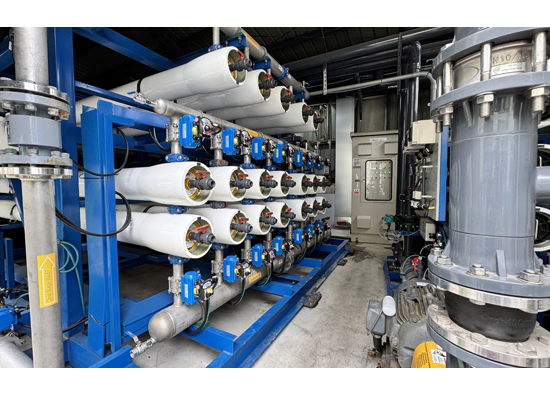
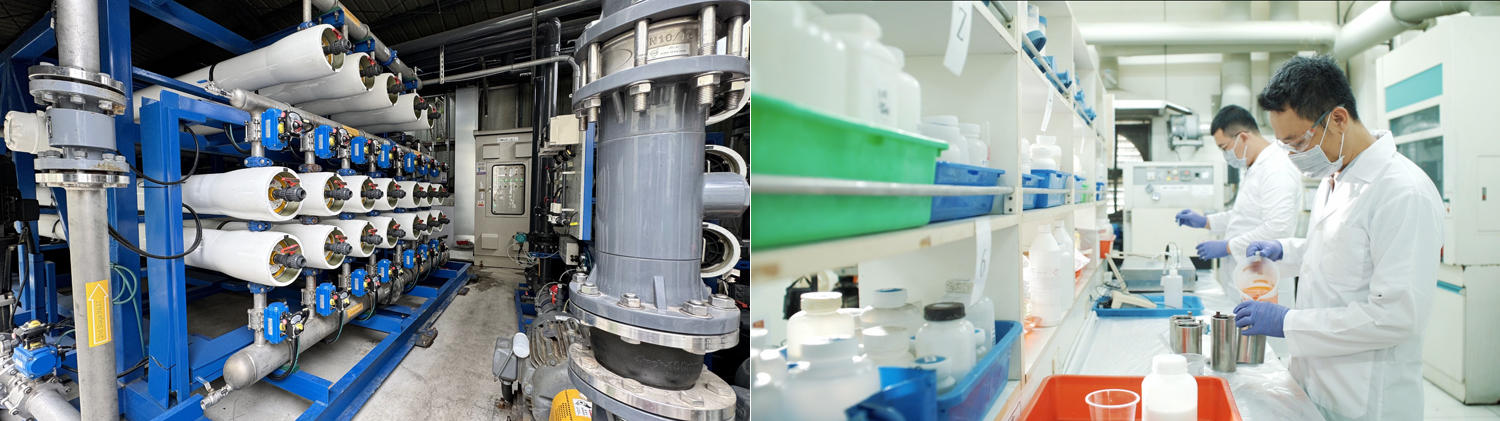 Under the increasingly strict requirements for global carbon reduction and brand sustainability, the competition in the textile industry has shifted from cost and quality to the integration of "low-carbon, digital, and value". Everest Textile promotes green transformation with systematic thinking, integrating digitalization of dyeing and finishing processes, energy management, equipment upgrades, AI intelligent manufacturing, automation, waste heat recovery, and water resource recycling into the entire factory operation, continuously strengthening low-carbon manufacturing capabilities, and creating a green textile supply chain that meets the sustainable needs of international brands.
 Smart dyeing and finishing: digitizing all aspects of quality, energy, water, and chemicals
Dyeing and finishing has always been the most energy consuming and water consuming process in textile manufacturing. Everest Textile has introduced AI, IoT, Big Data, and automation equipment to monitor process parameters in real-time. Combined with historical data and machine learning, it optimizes dyeing formulas and process conditions. At the same time, it digitizes the experience of experienced masters, accurately controls the amount of dyes and auxiliaries, reduces raw material waste and wastewater load, and improves the success rate and quality consistency of a single dyeing process.
Taking raw material control as an example, Everest Textile dyeing and finishing factory has introduced a smart dyeing system that can automatically weigh chemicals, reduce the workload of 8 people, and recover investment in about 18 months; The color accuracy has increased from 87% to 90%, the repair rate has decreased, and about NTD 300000 is saved per month. The dyeing capacity has also increased by 20%, while achieving cost reduction, quality improvement, and efficiency enhancement.
In terms of heat and water resource reuse, Everest Textile recovers waste heat through source diversion and cold and hot exchange, and introduces an innovative FR-RO flow reversal reverse osmosis system. The water resource recovery rate exceeds 90%, and it has won the Water Treatment Excellence Award of the Ministry of Environment's "Sustainable Water Purification Award". In addition, with the support of the Water Resources Agency of the Ministry of Economic Affairs, Everest Textile has established a comprehensive water resource efficiency management system through guidance from the Industrial Technology Research Institute and the Environment and Development Foundation. In 2025, it will be verified by Bureau Veritas and obtain the ISO 46001:2019 water resource efficiency management system certificate, demonstrating its continuous improvement ability in water-saving efficiency, water resource management, and sustainable governance.
Material Balance Science: It's not about 'the higher the environmental ratio, the better', but about finding the optimal balance point
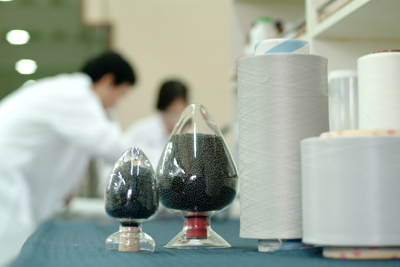 Everest Textile focuses on a variety of green raw materials, including agricultural waste biomass materials, carbon capture fibers, and chemical/physical recycling materials. It covers a range of products including Recycle Nylon, Recycle Polyester, Bio Nylon, Bio PET, Bio Spandex, and Carbon Capture PET, and has the ability to vertically integrate fibers, dyeing and finishing, post-processing, and smart manufacturing. The core of product development is "performance x carbon footprint x cost x recyclability". Through material modification, low-carbon processes, and smart manufacturing, we balance functionality, quality, and sustainability to create green products with market competitiveness.
In terms of raw material procurement, Everest Textile has deeply rooted "recycled economy" and "green procurement" in the operational process of design, procurement, and shipment. By 2025, environmentally friendly yarn procurement will account for 49% of raw yarn procurement, and green product revenue will reach 2.47 billion yuan, a growth of 22%.
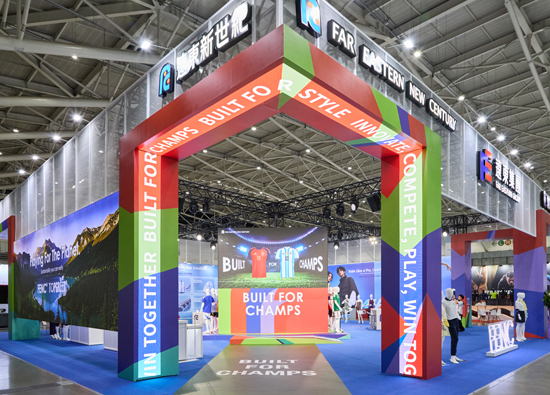
In terms of market promotion, Everest Textile will participate in 20 physical exhibitions in 2025 to provide customers with differentiated green solutions. Among them, the "RE: NEO Next Generation Screen Protection Cloak" developed by bonding a single material of full polyester won three awards in 2025, including the iF Design Award, C-IDEA, and the German Red Dot Design Award; In 2026, the sustainable design "O: ACTION Yunyang Functional Clothing" won the iF Design Concept Award, demonstrating the research and development strength of low-carbon innovation and circular design.
From 'Smart Green Factory' to 'AI Driven Low Carbon Product Development Platform'
In terms of smart energy management, Everest Textile uses IoT to monitor energy usage such as electricity, steam, and air compression in real-time, identifying abnormal energy consumption hotspots; Key machines are equipped with sensors to monitor temperature, vibration, and operational data, detect anomalies in advance, reduce failure rates and energy consumption, and upgrade the maintenance mode from "repair only when broken" to "repair only when needed".
In terms of carbon reduction, Everest Textile has developed a carbon reduction roadmap for each factory since 2022, focusing on three major strategies: first, developing renewable energy and establishing solar power generation systems in each factory; The second is low-carbon boilers, gradually replacing coal with biofuels, and then planning to fully introduce LNG; The third is to replace high energy consuming equipment and continue to introduce energy-saving machines from 2024.
The results of a multi pronged approach are gradually emerging. Currently, the electricity intensity has been reduced by 50%, the water intensity has been reduced by 60%, and the wastewater recovery rate has reached 42.42%. In the medium and long term, we are moving towards the goal of a 50% water recovery rate in the factory area by 2030; In addition, the first and second carbon emissions of the Taiwan factory in 2025 will be 87771 tCO ₂ e, a decrease of about 30% compared to the benchmark year in 2020.
However, as the industry gradually follows up with green manufacturing, Everest Textile further upgrades its "smart green factory" to an "AI driven low-carbon product research and development platform", establishing a dual moat of technology and scale with five elements: "continuous innovation, data accumulation, equipment upgrading, cost reduction, and product differentiation". The integration of AI and data accumulation forms a technological threshold, combined with the vertical integration of fiber, dyeing and finishing, post-processing, and smart manufacturing, as well as equipment upgrades, to achieve consistent production and the advantages of integrating AI and green processes. This is a competitive advantage that is difficult to replicate in the short term. In the future, Everest Textile will transform from a material supplier to a sustainable solution provider through the "smart x green" dual axis drive, forming a closed-loop advantage with technology, scale, and data, and continuously strengthening its market leading position.
Resilience comes from the interweaving of technology, data, and culture
From the comprehensive digitization of dyeing and finishing processes, to the pursuit of a balance between performance, carbon footprint, cost, and recyclability on the material side, and to the long-term layout of AI driven research and development platforms, Everest Textile demonstrates an interlocking sustainable logic. This comprehensive resilience, interwoven with smart technology, material innovation, and cultural narrative, is exactly how the company defines the next stage of competition rules in the textile industry.
#