11.2026 Office Talk
The daily sustainable transformation of Taipei Metro
Yuan Ding / Jian Jingzhou

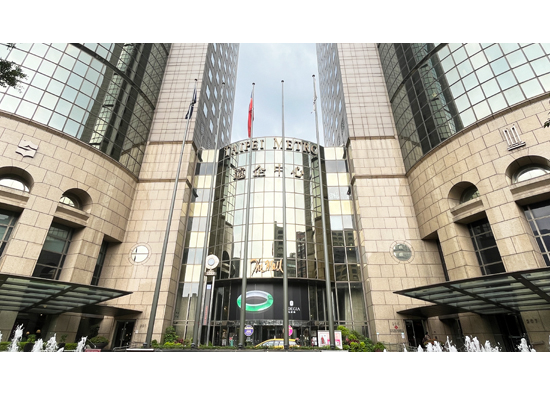
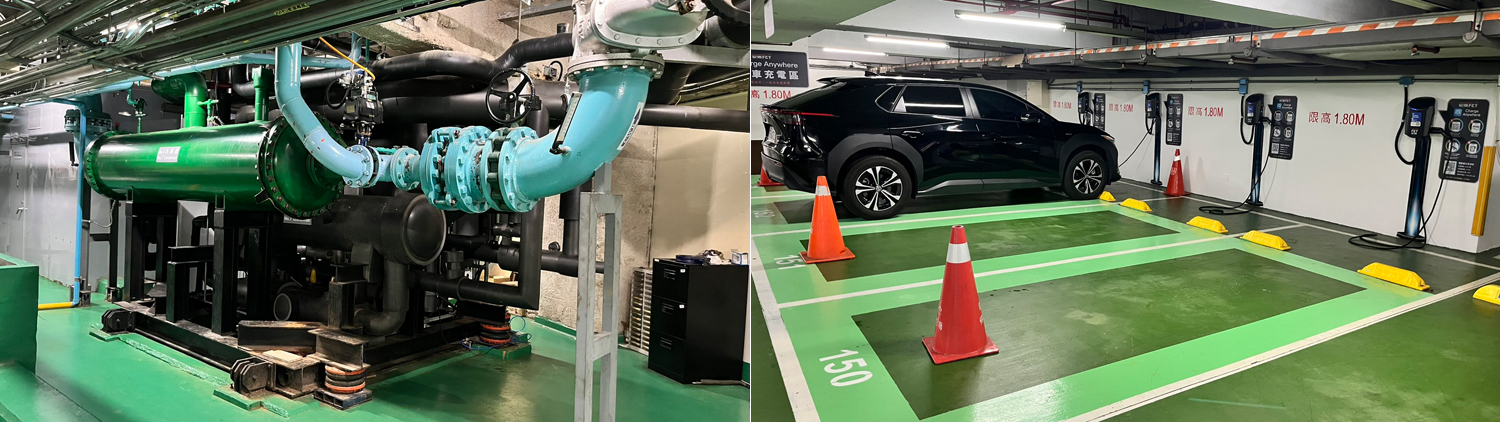
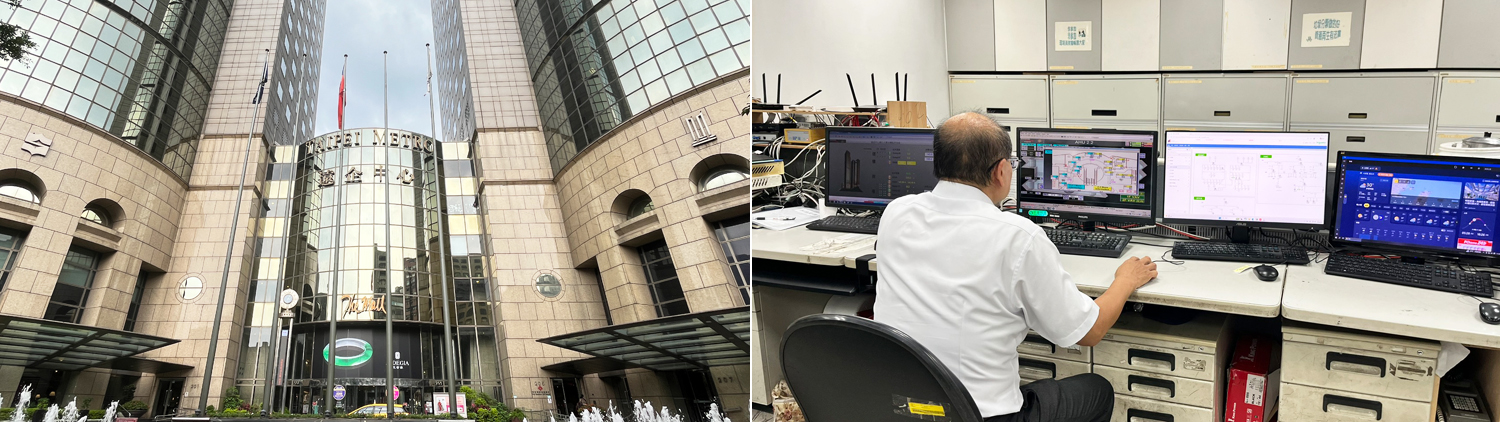 In recent years, climate change, net zero emissions, and ESG have become important issues for businesses. When many people talk about sustainability, the first things that come to mind are new buildings, green building certifications, or advanced energy-saving technologies; However, for a commercial office building that has been in existence for 32 years, the challenge lies in how to continuously optimize it from the existing foundation, keeping the building up-to-date and responding to the needs of the new era. I am fortunate to participate in Taipei Metro's sustainable promotion work, from optimizing air conditioning systems, energy management, equipment updates, to reorganizing sustainable award materials and coordinating across departments. Although the daily work may seem different, it always revolves around the same goal - to make Taipei Metro better than yesterday.
 In 1994, Taipei Metro was officially completed and put into use. For 32 years, it has witnessed countless enterprises, workers, and partners working hard and growing here. Every morning, when the first office worker enters the building, the elevator runs smoothly, the air conditioning supplies air steadily, and the lights turn on in sequence. These seemingly natural daily routines actually come from daily maintenance, improvement, and refinement.
There was a time when my computer was simultaneously running over twenty files, including energy analysis, equipment improvement plans, project progress, meeting minutes, sustainability briefings, award materials, etc. I switched between different projects every day, busy coordinating during the day and repeatedly checking data and revising briefings at night, hoping that each achievement could be presented completely and truthfully.
Once, in order to confirm an energy data, I flipped through the improvement records of previous years and was surprised to see the continuous growth trajectory of a building. From optimizing air conditioning systems, updating lighting equipment, gradually maturing energy management systems, to repeatedly working with tenants to promote energy-saving actions, those seemingly scattered tasks have actually become an important process for Taipei Metro's sustainable transformation. At that moment, I truly understood that sustainability is not written in reports, but in daily inspections, cross departmental discussions, and every improvement project.
Another unforgettable scene for me was on a night when a typhoon hit. Most people had already returned home to avoid the wind and rain, while my colleagues and I stayed in the building, inspecting the computer room, confirming drainage equipment, checking the air conditioning system and emergency power supply equipment. Outside the window, the wind and rain were mixed, and in my ears, only the sound of stable equipment operation could be heard. At this moment, it suddenly occurred to us that the next morning, when tenants walked into this building, they would not know that someone had been patrolling until late last night, but would only feel that everything in the building was normal - this is exactly what we hope to do the most, because the best property management is not to let people see, but to make people feel at ease.
ESG takes a longer-term perspective to do our daily work well and promote sustainable processes, which has also made me realize the importance of teamwork. Due to an equipment update, an engineering professional evaluation is required; An energy-saving improvement requires a balance between usage needs and operational efficiency; A sustainable outcome requires assistance from different departments in providing information and repeatedly confirming the content. Through joint efforts from all parties, improvements have been gradually implemented, building energy efficiency and operational resilience continue to improve, and Taipei Metro continues to move towards low-carbon, smart, and sustainable directions, thus facilitating the achievement of LEED O+M Gold certification for existing building operations and maintenance by 2025. For us, these honors are not only affirmation, but also a responsibility.
Buildings will age over time, but the vitality of a building comes from its willingness to continue improving. Perhaps it's just saving one kilowatt hour of electricity, improving equipment, reviewing data repeatedly, having a discussion that lasts until late at night, or silently sticking to one's post during a typhoon night, but it's these ordinary and down-to-earth daily routines that accumulate into a constant force moving forward, and it's every partner who is willing to do their job better that drives this change.
For 32 years, Taipei Metro has accompanied the development of this city; In the future, we also look forward to it welcoming the next 32 years in a safer, more energy-efficient, and environmentally friendly way. Because true sustainability is not about leaving behind a brand new building, but about allowing a building worth keeping to continue to accompany the next generation.
#