11.2026 Office Talk
Let shoes become shoes again
Far Eastern New Century Corporation / Zhou Mingze

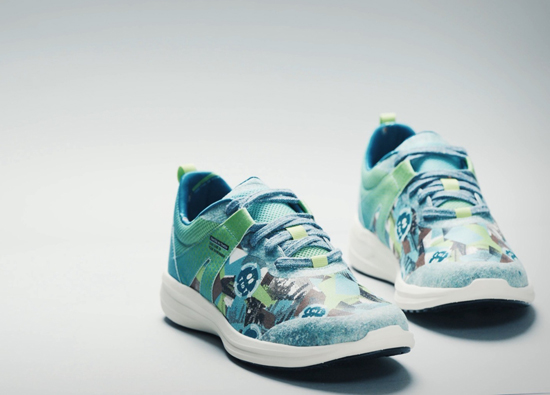
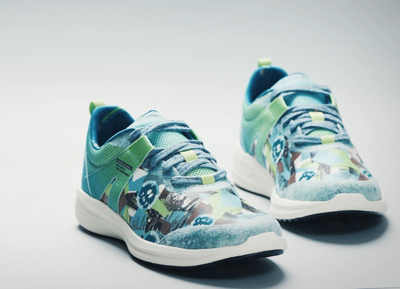 In 2026, Far Eastern New Century Corporation partners with FENC to ® TOPGREEN ® RTPEE technology has won the R&D 100 Awards (Global Top 100 Technology R&D Awards). The starting point of this world-class innovation, however, originated from a very common question: Where did the old shoes go?
Circular thinking on a pair of shoes
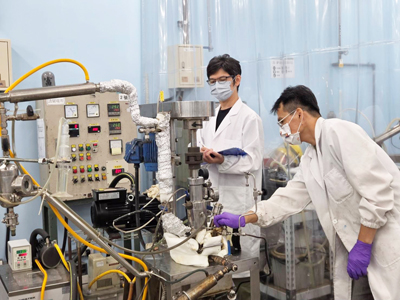 In the eyes of most people, the structure of a shoe consists of an upper, shoelaces, sole, and midsole. However, what researchers see is a material puzzle: shoe fabric, elastic fibers, foam materials, support materials, decorative pieces, waterproof film, adhesives, and different plastics overlap with each other, just like using strong adhesive to stick different building blocks together.
In a recycling discussion, the R&D center R&D team disassembled a pair of sports shoes and spread different parts on the table. Looking at the increasing amount of materials, someone asked, "If shoes are not easy to disassemble after being discarded, can we make them easier to recycle from the beginning of the design?" This question also prompted the team to think about how to use "polyester" material for the upper, shoelaces, and thick sole, so that there is no need to spend a lot of manpower and machines dismantling and classifying each component during recycling. This' single material 'design thinking is the shortcut to reviving discarded shoes.
Transforming discarded fabrics into high-value materials
Polyester is now widely used not only in clothing and shoe materials, but also as an important source of textile waste. The team's goal is not only to recycle waste polyester, but also to upgrade it into high-value materials. FENC ® TOPGREEN ® RTPEE was born under this concept: based on recycled polyester, through material design, it is endowed with soft, elastic, and durable characteristics similar to rubber, which can be applied in the fields of shoe midsole, outsole, elastic fiber, waterproof breathable film, and artificial leather.
However, recycled raw materials are not as obedient as new ones, and each batch may have different colors, qualities, and compositions; Moreover, in addition to using sustainable materials, different functions need to be assigned their own roles: the midsole of the shoe needs to rebound, the outsole needs to be wear-resistant, the waterproof breathable membrane needs to be both waterproof and breathable, and it also needs to adhere to the "polyester" material system.
In the early stages of research and development, there were samples that performed well in the laboratory, but did not meet expectations after entering the shoe material processing. The team repeatedly adjusted the formula and process, attempting to strike a balance between recycling content, softness, heat resistance, and processing stability. After all, 'being able to do it' is only the first step, 'being able to consistently produce it' is the starting point for mass production.
Joining hands with partners to accomplish impossible tasks
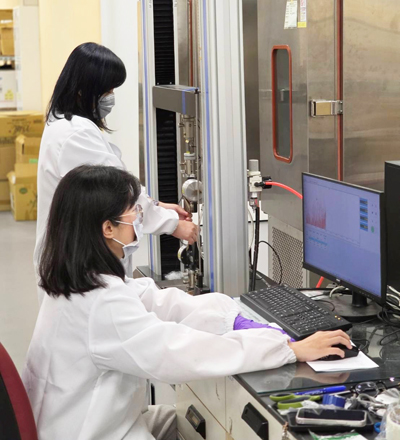 A pair of reusable shoes cannot rely solely on one material, nor can it be completed by a single enterprise alone. It requires a combination of waste disposal, polyester recycling, material modification, fabric manufacturing, shoe material shaping, and overall shoe design. In this collaboration, the Textile Industry Integrated R&D Center, Far Eastern New Century Corporation, General Assembly Industries, and Guangwei International each lead professional teams to relay the circular path from waste to shoes.
Due to the fact that shoe material waste often contains polyester, elastic fibers, PU adhesives, and dyes, the "one-step separation and decolorization" process plays a key role in separating impurities, removing colors, and leaving high-purity recycled polyester that can be remanufactured at the same stage.
Another key is FENC ® TOPGREEN ® rTPEE Recycling polyester can not only be converted into fibers, but also into materials with elasticity, resilience, waterproofing, or adhesive properties, replacing traditional TPU (thermoplastic polyurethane) that is difficult to recycle together with polyester. In this way, different parts of the shoes can be made of polyester materials, becoming products that are similar in appearance and function to general sports shoes, but can be manufactured, worn, and recycled.
The glory of standing on the world stage
This time, winning the R&D 100 Awards, the international judges saw not only a Wuhan Far Eastern New Material, but also a circular solution covering waste disposal, material conversion, product design, and manufacturing applications. FENC ® TOPGREEN ® Compared to traditional TPU, rTPEE can reduce over 40% of carbon emissions while balancing material performance and the possibility of recycling, demonstrating the innovative value of "carbon reduction, high functionality, and recyclability".
A team member said, 'The hardest part is not to come up with an ideal, but to make it pass every test and finally enter the production line.' From this, it can be seen that behind the award are repeated formula adjustments, failures, communication, and starting anew.
Making sustainability more than just a slogan
FENC ® TOPGREEN ® RTPEE not only reduces the use of petroleum raw materials, but also prepares for the next life from the beginning of product design. For Far Eastern New Century Corporation R&D Center, there are more possibilities for future applications. When discarded fabrics can be transformed into high-performance materials and old shoes can return to the manufacturing cycle, sustainability is not just a promise in reports, but a daily practice that can be seen, worn, and constantly reborn.
#