
02.2022 Office Talk
Virtual and real strategy to reshape the new normal of retail
Group integrated efficiency and retail planning headquarters /

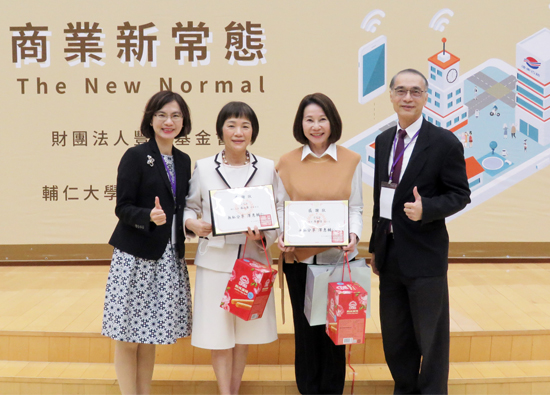
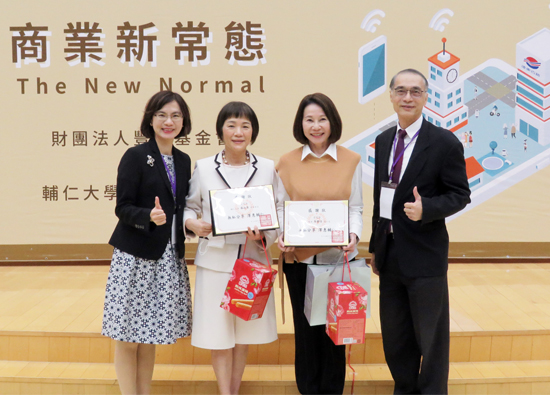 The novel coronavirus pneumonia spread worldwide, catalyzing the new normal economy, and "digital transformation" has become a topic that all enterprises must face. The Department of business management of Fu Jen University and fengqun foundation, a consortium, held a "business new normal seminar" to invite industry officials and academics to discuss future development trends. Li Jingfang, executive director of the group's comprehensive efficiency and retail planning headquarters, was also invited to share retail trends and Breakthrough Strategies in the post epidemic era under the theme of "new normal X retail, virtual and real channels and strategies", hoping to exchange industrial experience, Create new normal value of business together.
The epidemic has impacted retail online and offline
 In 2020, under the attack of COVID-19, the World Bank (World Bank) announced that the global fear of "10 years of loss" was prelude, and the economic recovery in the future was slowing down. Not only the newly developed countries, but also the highly developed countries also covered them, especially in the retail industry, and the number of bankruptcies in the United States in 2020 was 52, with an annual growth rate of 62.5%. It reached a new high in recent ten years. In contrast, in Taiwan, the epidemic intensified in May 2021, and the consumer confidence index plummeted. So far, the consumer index has not significantly returned to the pre epidemic level.
Li Jingfang, executive director of the group's comprehensive efficiency and retail planning headquarters, analyzed that since 2020, Taiwan has experienced two waves of major epidemic changes, during which e-commerce has increased by leaps and bounds. When the epidemic was severe in June 2021, the annual growth rate of e-shopping and mail order industry was 33.7%, and the turnover reached a new high in the same month over the years. On the contrary, physical channels fluctuate greatly, especially department store retail. The number of visitors has fallen sharply due to the epidemic. According to the statistics of the Ministry of economy, the turnover has declined by 64.7%. Although the father's day schedule has slightly warmed up due to the micro unsealing, it has not grown significantly, mainly due to the change of consumer behavior due to the epidemic, such as reducing the time of staying in the mall, developing delivery and online shopping.
The epidemic has accelerated the speed of retail transformation. Although the whole channel of virtual and real integration has been repeated, from the one-way o2o (online to offline / offline to online) in the past to the two-way Omo (online merge offline), with the fuelling of the epidemic, physical channels must make more efforts online.
Survival under the epidemic of shopping malls and Deconstruction of customer consumption journey
CEO Li Jingfang explained how department stores solved the consumption pain points under the epidemic situation and put forward contingency strategies based on the 5E contact points in the customer journey (inducing entry, entering, engaging, leaving exit and recommending / extending).
1、 Fully implement epidemic prevention and build a reassuring store (entice + Enter)
In addition to strengthening epidemic prevention measures, shopping malls also set up "epidemic prevention channels" at entrances and exits, install hand sterilizers, measure body temperature by infrared, spray disinfection, wear masks for all staff, and disinfect public areas regularly; Food street counters also need to be equipped with a set of double masks (masks, masks, gloves), cooking masks and clapboard plum blossom seats. Effective communication channels also need to be established to make consumers feel at ease.
2、 Fast food shopping and super convenient take out home accessories (engage + extend)
With the warming of the epidemic alert and the prohibition of internal use of catering, the department store and shopping center provides "drive through" catering and shopping take out delivery services through mobile app, telephone or delivery platform. Customers can quickly pick up and receive goods without entering the store, extending the store service to the outside. Not only food, but also supplies for home and office epidemic prevention can be quickly distributed through online payment to meet consumer demand and take into account epidemic prevention. The epidemic intensified the change of physical channels, quickly found out the corresponding business model, so that the brand counter can continue to maintain the transportation, which not only increased the transaction volume and customer unit price, but also doubled the click and adhesion of channel app.
3、 Zero contact action payment becomes a sharp weapon for epidemic prevention (exit)
In order to reduce exposure during the epidemic, mobile payment has become an important tool. According to the survey, after the three-level alert, nearly 50% of consumers use mobile payment every day, more than 75% of people increase the frequency of using mobile payment, and the "heavy users" who use mobile payment every day have also increased significantly by 30%. Among them, the "collective cash" is the incentive to drive consumer repurchase. Far eastern group happy go pay gave full play to its comprehensive effect during the epidemic period. It not only accumulated the consumption behavior data of members, but also improved the use adhesion due to the mutual exchange of points. Membership economy promoted the purchase amount by about 5 times and the number of transactions by 4 times.
Turning retail thinking to create a cross-border virtual and real ecosystem
Deloitte's research report points out that COVID-19 has brought about four major breakages: acceleration of technological progress, continuous changes in consumer habits and preferences, increasingly heavy economic pressure, and changes in the market environment. The destruction accelerates the change. In the post epidemic era, the retail industry will face the trends of online shopping becoming the main force of growth, developing new sales models (developing delivery, subscription, leasing and resale), repositioning of physical channels, increasing importance of convenience, rising health awareness, retail merger and market dispersion.
CEO Li Jingfang pointed out that the evolution of science and technology and the market are changing rapidly. In the post epidemic era, the integration of online and offline channels has become an inevitable trend. With the prevalence of the virtual world of the meta universe, breaking the virtual and real boundary and creating a new life and shopping experience will be the foreseeable future. "One person goes fast and a group of people go far". In the future, the speed of cross-border ecosystem integration will accelerate, the uncertainty and complexity of the market will continue to increase, and the retail industry is still in the state of crossing the river. In the face of the treacherous and changeable market, we should be vigilant, flexible and respond quickly in order to get rid of the shell, change and grow in adversity.
#