
03.2025 Life Guide
Taro comes, taro is good, taro sees delicious desserts
Yu Chang Technical Commercial Vocational High School / Qiu Xiuyun

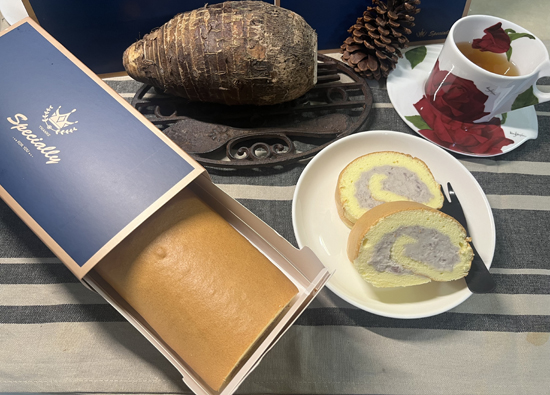
 Taro is a kind of tuber food, which is a common staple food. It contains starch, protein and a variety of minerals, and is rich in dietary fiber, which is conducive to controlling blood sugar, promoting defecation, and maintaining intestinal health. After cooking, it will produce a special flavor, which can be used as salty food (such as taro ribs, taro braised chicken, etc.), or made into desserts and Dim sum (such as taro balls, Taro cake, taro cakes, taro ice cream, etc.). In this issue of 'Gourmet Column', we will demonstrate how to make delicious and non greasy 'taro cake rolls' and' taro puree orange flavored cheesecake ', allowing you to enjoy both deliciousness and health benefits.
 1、 Taro Cake Roll
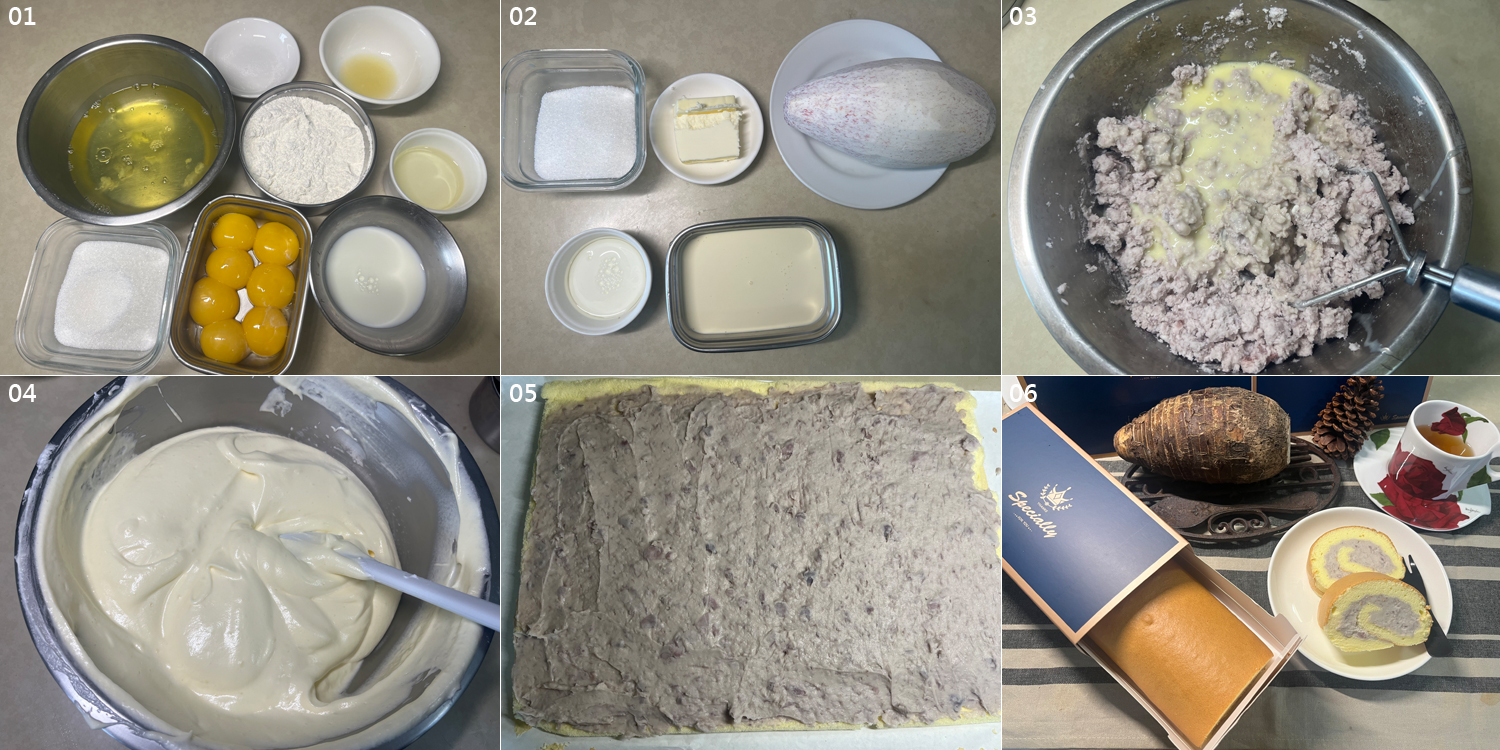
[Materials]
Taro puree: 520g taro, 130g animal based fresh cream, 83g granulated sugar, 42g salt free cream, 30g milk.
Qi Feng Cake:
1. Noodles: 37g salad oil, 130g egg yolk, 60g milk, 100g low gluten flour.
2. Protein paste: 270g protein, 110g granulated sugar, 1g salt, 2g lemon juice.
[Equipment]
Electric pot, oven, deep baking tray (43 cm x 33 cm), upright egg beater, electric egg beater, rubber scraper, 2 medium-sized steel pots, mud press, electronic scale, rolling pin.
[Method]
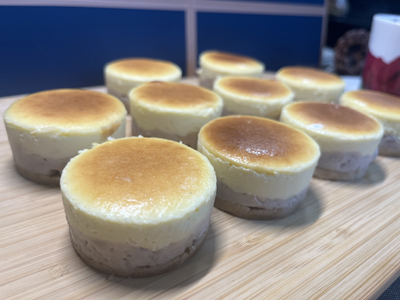 ● Conus paste
1. Peel and slice taro, steam until cooked, and press it into a paste using a press.
2. Boil animal based fresh cream, granulated sugar, salt free cream, and milk over low heat until the cream melts, then pour into taro puree and mix well.
Qi Feng Cake
1. Noodles: Mix salad oil with milk, then add sifted low gluten flour and mix well. Finally, pour in egg yolks and mix well.
2. Protein batter: Add salt and lemon juice to the protein, beat until slightly foamy, then add sugar twice and beat until dry and foamy. Be careful not to mix egg yolks with the egg whites, and there should be no oil or water in the container in order to smoothly beat the egg whites.
3. Mixing: Add 1/3 of the egg whites to the batter and mix well. Then add the remaining 2/3 of the egg whites and mix well. Pour onto a baking tray, smooth the surface of the cake batter, and bake on high heat at 190 ℃ and low heat at 120 ℃ for 19 minutes. (Oven settings vary by brand, the above baking temperature and time are for reference only)
● Finished product assembly
Spread the taro paste on the cake body, roll it into a cake roll, and then cut it into the desired length.
2、 Orange flavored cheese cake with taro paste
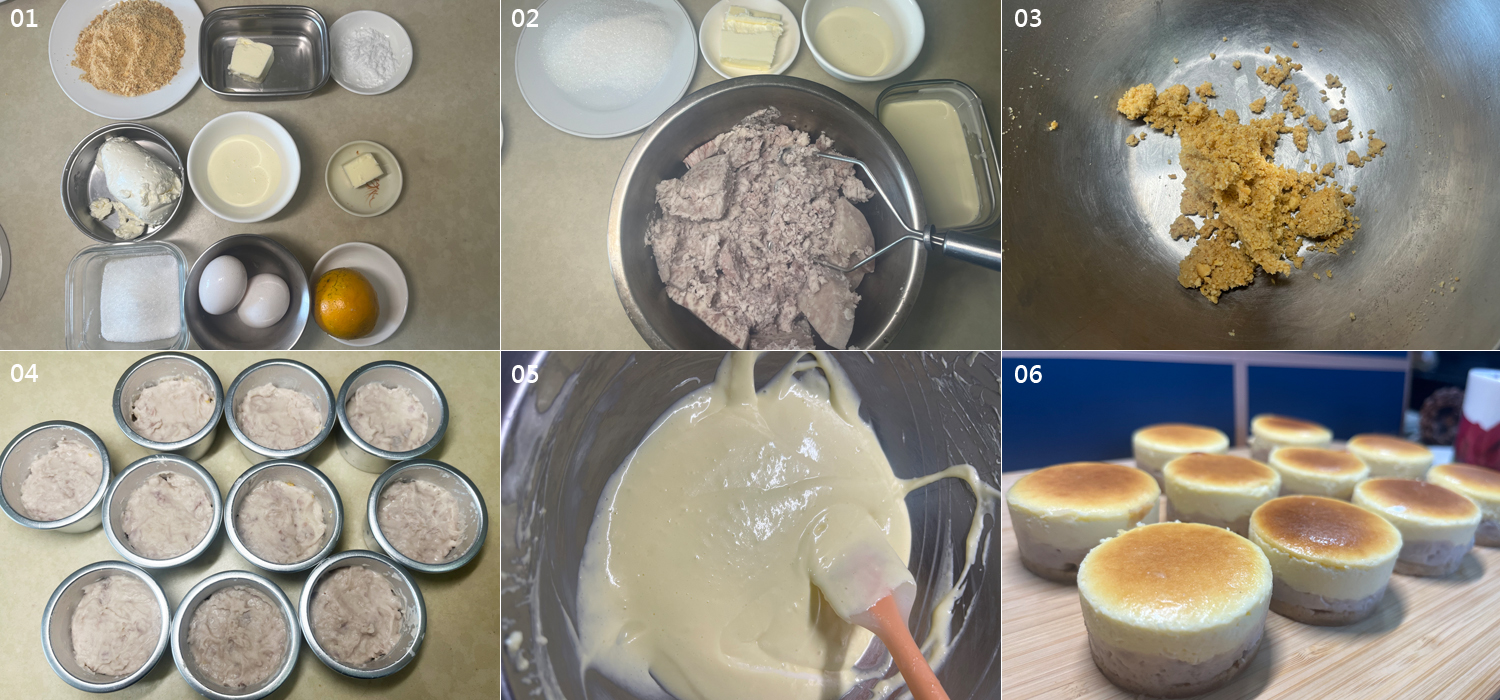 [Materials]
Biscuit base: 60g crushed Gifu cookies, 10g powdered sugar, 30g salt free cream.
Taro puree: 130g taro, 33g animal based fresh cream, 21g granulated sugar, 10g salt free cream, 8g milk.
Orange flavored cheesecake:
1. Pastry: 220g cream cheese, 17g cream, 33g egg yolk, 33g animal based fresh cream, 20g orange juice.
2. Protein paste: 55g protein, 44g granulated sugar, 2g lemon juice.
[Equipment]
Oven, deep baking tray (43 cm x 33 cm), upright egg beater, electric egg beater, rubber scraper, 2 medium-sized steel basins, 10 2-inch circular movable cake molds, electronic scale, small spoon.
[Method]
Biscuit base: First, wrap the 2-inch cake mold with tin foil to prevent water from seeping into the cake during heating and baking; Next, mix the crushed cookies, powdered sugar, and salt free cream together, and spread 10g at the bottom of each cake mold.
● Conus paste
1. Peel and slice taro, steam until cooked, and press it into a paste using a press.
2. Boil animal based fresh cream, granulated sugar, salt free cream, and milk over low heat until the cream melts. Pour into taro paste and mix well. While hot, pour 20g of taro paste filling onto the bottom of the cookie and smooth it out.
Orange flavored cheesecake
1. Pastry: Heat the cream cheese and butter over water until melted, then mix well. Pour in animal based fresh cream, orange juice, and egg yolk and mix well.
2 protein paste: Add the protein to lemon juice, beat until slightly frothy, then pour in sugar and beat slightly (about 5 portions are enough to prevent the surface of the finished product from cracking after baking). Next, add 1/3 of the egg whites to the batter and mix well. Then add the remaining 2/3 of the egg whites and mix well. Finally, pour the cake batter onto the taro paste, 30g per cake mold.
3. Pour 500g of water into the baking tray and bake for 20 minutes using the method of heating over high heat at 170 ℃ and then over low heat at 170 ℃. After that, reduce the temperature to 160 ℃ and then over low heat at 160 ℃, and bake for another 40 minutes. (Oven settings vary by brand, the above baking temperature and time are for reference only)
#