
08.2025 Cover Story
Low carbon thinking and sustainable layout of Asia Cement Corporation
Asia Cement Corporation / Editorial Room

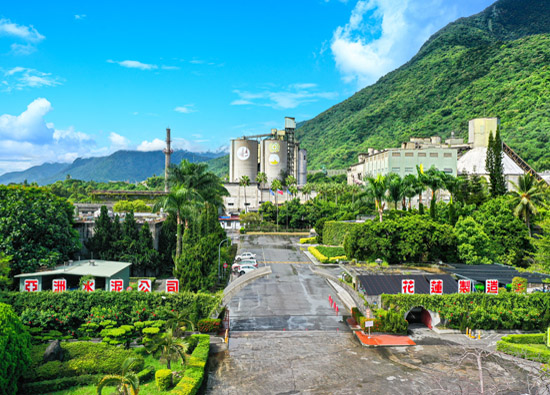
 The transformation of enterprises cannot be achieved overnight. In order to achieve the vision of net zero sustainability, Asia Cement Corporation has made multiple layouts, gradually created green processes, expanded industrial influence, gathered supply chain partners to work together to reduce carbon footprint, and demonstrated through actions that energy conservation and carbon reduction have become the DNA of Asia Cement Corporation. In the future, it will continue to build sustainable lives for the people through low-carbon cement and negative carbon building materials.
Green oriented towards net zero
.jpg) The cement industry has always been regarded as one of the high carbon emission industries, and there is a long way to go in the race towards net zero transformation. Complex production processes, high equipment costs, emerging carbon reduction technologies, and so on, each investment challenges the cost and risk of business operations. At the same time, the unstable global political and economic situation, the high environmental regulatory requirements brought about by the net zero wave, and the continuous implementation of systems such as carbon fees and carbon trading markets are testing the company's sustainable beliefs. As the scope of E (environment), S (society), and G (governance) continues to expand, enterprises need comprehensive strategic planning to continuously implement actions. For Asia Cement Corporation, which is committed to becoming a benchmark in the cement industry, "green thinking" is not only a symbol of environmental protection, but also the core value of Sustainability Development, and the key to the company's ability to lead the industry's low-carbon transformation.
The cement industry has always been regarded as one of the high carbon emission industries, and there is a long way to go in the race towards net zero transformation. Complex production processes, high equipment costs, emerging carbon reduction technologies, and so on, each investment challenges the cost and risk of business operations. At the same time, the unstable global political and economic situation, the high environmental regulatory requirements brought about by the net zero wave, and the continuous implementation of systems such as carbon fees and carbon trading markets are testing the company's sustainable beliefs. As the scope of E (environment), S (society), and G (governance) continues to expand, enterprises need comprehensive strategic planning to continuously implement actions. For Asia Cement Corporation, which is committed to becoming a benchmark in the cement industry, "green thinking" is not only a symbol of environmental protection, but also the core value of Sustainability Development, and the key to the company's ability to lead the industry's low-carbon transformation.Given that cement accounts for only about 10% of concrete but contributes 90% of carbon emissions, in order to fully implement the green concept, Asia Cement Corporation focuses on creating a "low-carbon green process" to promote the three main axes of recycled economy, optimize process energy efficiency, and validate and promote low-carbon products. In terms of recycled economy, Asia Cement Corporation has long been committed to the research and application of cement kiln co processing technology, fully utilizing the characteristics of high temperature, long combustion time, and strong turbulence of rotary kilns to safely and efficiently process diverse waste, practicing the concept of "turning waste into treasure". The resource recycling technology of Asia Cement Corporation not only effectively reduces production costs and improves waste disposal efficiency, but also helps to reduce natural resource dependence and greenhouse gas emissions, balancing economic and environmental benefits. In terms of green processes, Asia Cement Corporation has established a critical resource management system for recycled economy, continuously optimizing the feeding equipment for alternative materials, and evaluating the addition of smart storage warehouses to expand supply capacity and improve operational reliability. In terms of low-carbon products, in response to the increasing demand for low-carbon building materials in the construction industry, Asia Cement Corporation has taken the lead in developing and promoting products such as "masonry cement" and "Portland limestone cement", with a cumulative sales volume of hundreds of thousands of tons.
Breaking through difficulties and setting goals
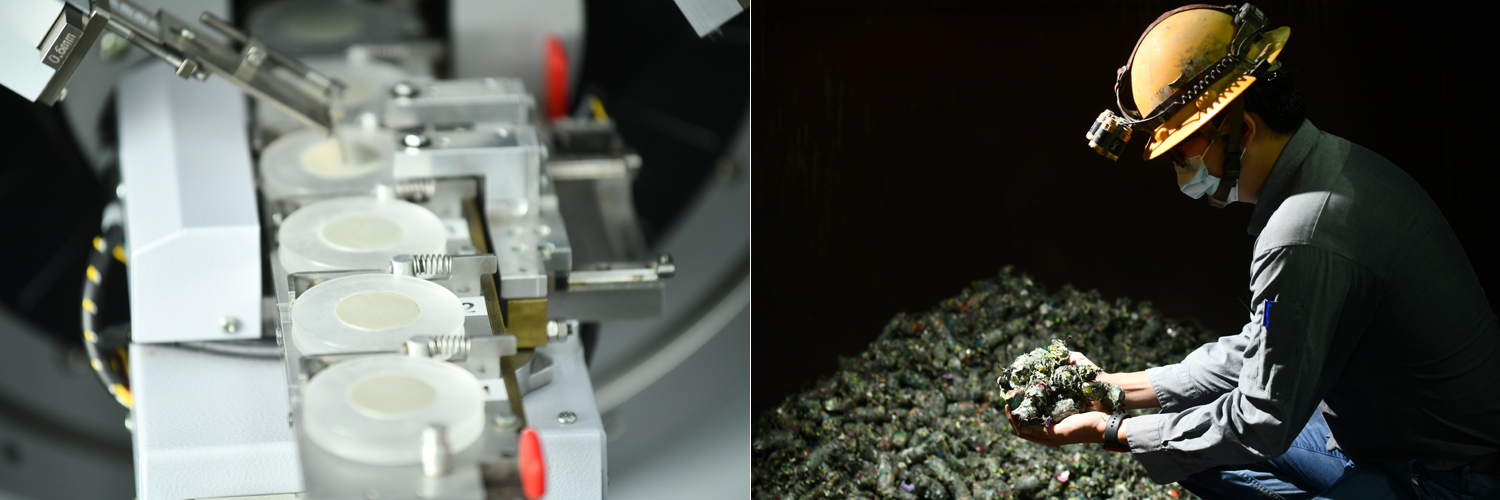 Despite taking various measures, Asia Cement Corporation still faces many challenges in the actual promotion process, among which high upfront investment in equipment is a major threshold. From 2021 to 2024, the company invested over NT $100 million in recycled economy related facilities. In addition to actively seeking government subsidies, Asia Cement Corporation also collaborates with experts from industry, government, and academia to diversify the costs and risks of technology introduction. In addition, in the early stages of low-carbon product sales, the market's acceptance and awareness of new products are limited, especially the lack of familiarity with product performance on site, which affects the promotion process. Therefore, Asia Cement Corporation takes the initiative to educate and train customers and promote marketing. In 2024, it will conduct nearly a hundred tours to enhance customer trust and market penetration through practical implementation and providing comprehensive product information.
As of 2025, Asia Cement Corporation has processed over 2 million tons of recycled materials, generating billions of New Taiwan dollars in annual benefits while continuously improving reuse rates, demonstrating the company's strength in promoting a recycled economy in the industry. To expand the influence of low-carbon products, Asia Cement Corporation plans and sets short-term, medium, and long-term goals for promoting low-carbon products: in the short term (2024-2025), it focuses on enhancing market awareness and customer recognition, promoting sales growth through participation in exhibitions, seminars, and business promotion; In the medium term (2026-2030), we will actively cooperate with government policies, expand the willingness of manufacturers and customers to adopt, and strive to introduce low-carbon products into public works; Long term (2031-2035) focus on strengthening brand and service value, developing a complete low-carbon cement product and value chain. In response to the above phased goals, Asia Cement Corporation has set specific targets for sales multiple growth to drive sustained performance expansion.
Up and down cooperation for industrial upgrading
Asia Cement Corporation believes that the key to achieving sustainable value for businesses lies in expanding their positive influence. Therefore, in addition to continuously deepening carbon reduction and green process technologies, we are also actively working with upstream and downstream supply chain partners to gradually construct a value chain that covers resource recycling, low-carbon materials, and innovative technologies, and promote the transformation and upgrading of the construction industry. The cooperation strategy of Asia Cement Corporation focuses on two major directions:
1. Collaborate with upstream partners to promote resource recycling and replace raw materials and fuels
Asia Cement Corporation has established mutually beneficial resource cooperation relationships with industries such as steel, electric furnaces, and petrochemicals, introducing industrial by-products such as converter slag, reduced slag, and mineral fines as alternative raw materials, effectively reducing dependence on natural limestone and other resources, and implementing the concept of recycled economy. At the same time, in terms of fuel use, we actively replace traditional high carbon coal with solid recycled fuels (SRF), waste plastics, and sawdust as alternative fuels, gradually reducing carbon emissions in the manufacturing process. In 2024, Asia Cement Corporation will replace hundreds of thousands of tons of raw materials with recycled materials, reducing carbon emissions by 23503 tons compared to 2023, demonstrating the achievements of resource recycling and carbon reduction.
2. Collaborate with downstream partners to develop low-carbon and negative carbon innovative building materials
Asia Cement Corporation is committed to developing innovative low-carbon materials to reduce carbon emissions throughout the entire life cycle of buildings. Not only does it assist downstream concrete and construction plants in reducing their carbon footprint through its own low-carbon cement products, but it also collaborates with Taiwanese research and development units to develop supergravity carbon sequestration technology, using industrial by-products to capture carbon dioxide and produce "negative carbon pellets" with carbon sequestration effects. This technology has been established in early 2025, and preliminary test results show that it can store up to 200 kilograms of carbon dioxide per metric ton of industrial by-products. If it can be commercialized and widely promoted in the future, it will become an important key for the cement and concrete industry to move towards net zero carbon emissions. To this end, Asia Cement Corporation has set a goal of capturing and reusing a total of 18000 tons of carbon dioxide by 2030 and increasing it to 36000 tons by 2035. In addition, synchronous development of separation and recycling technology for building waste concrete can improve the quality and efficiency of recycling, promote the closed-loop circulation of building resources, and create a complete low-carbon solution from the source to the end.
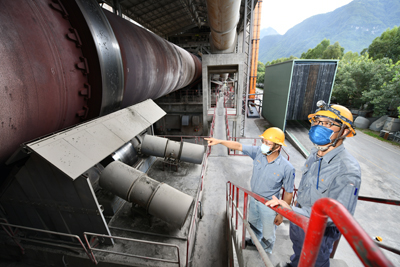 Asia Cement Corporation's subsidiary Ya Tung Ready Mixed Concrete Corporation has also responded to the low-carbon trend by developing a "drying cycle carbon fixation treatment system" to address the common problem of pre mixed concrete waste materials on construction sites. The system uses highly absorbent polymers to quickly dry waste materials, shorten processing time, reduce water consumption, and recycle aggregates through screening for reuse in concrete processes. At the same time, carbon mineralization technology is introduced to store carbon dioxide and generate calcium carbonate from waste materials, achieving dual benefits of resource recycling and carbon reduction.
Carbon reduction determination to fulfill commitments
Asia Cement Corporation's years of hard work and accumulation are gradually bearing fruit. In 2024, the Hualien factory not only won the title of "Outstanding Industrial Greenhouse Gas Voluntary Reduction Manufacturer" for the tenth time, becoming the factory with the most awards in Taiwan, but also the first green factory in Taiwan to obtain dual certification from the Ministry of the Interior's "Green Building Label" and the Ministry of Economic Affairs' "Clean Production Assessment". In the same year, it completed the ISO 14067 carbon footprint verification of all cement products, constructing the most complete cement carbon history in Taiwan.
Looking at the three key factors for the success of Asia Cement Corporation, the first is that the team integrates low-carbon design thinking into various stages of raw material selection, process control, product use, and waste disposal from the perspective of product lifecycle, reducing carbon footprint and environmental impact; Secondly, providing low-carbon cement products to assist the construction industry in its carbon reduction transformation, leveraging the influence of the "vein industry", promoting the application of alternative fuels and raw materials, effectively eliminating waste, and achieving resource recycling and reuse; Finally, in response to the potential impact of the implementation of the carbon fee system, we have taken the lead in formulating an internal carbon pricing mechanism, incorporating carbon risks into operational and investment decisions, and integrating internal resources. We have proactively proposed independent reduction plans and applied for carbon fee preferential rates to the Ministry of Environment, demonstrating our proactive efforts and planning power in reducing carbon emissions.
Looking ahead to the future, Asia Cement Corporation takes "2050 Net Zero Emissions" as its medium - to long-term development core, and plans a net zero path and framework based on the SBTi scientific basis carbon reduction target. As the only company in Taiwan's cement industry that has consistently achieved its SBTi target and achieved the original 2025 SBTi carbon reduction target ahead of schedule by 2024, Asia Cement Corporation has further proposed the next stage of SBTi carbon reduction commitments based on the 1.5 ° C climate scenario this year: using 2021 as the base year, reducing carbon emissions by 22.9% in 2030 and 43.5% in 2035, accelerating the promotion of net zero emissions targets. Asia Cement Corporation firmly believes that carbon reduction is not only a manifestation of corporate responsibility, but also a core driving force for innovation and sustainable growth. Only by actively adapting and proactively laying out can we steadily move forward in the increasingly severe international trend of carbon regulation and exert greater influence in the industrial value chain.
#