
01.2026 Life Guide
Establishing a defense line for construction and opening up a new daily security routine
Far Eastern New Century Corporation / Chen Fangyu

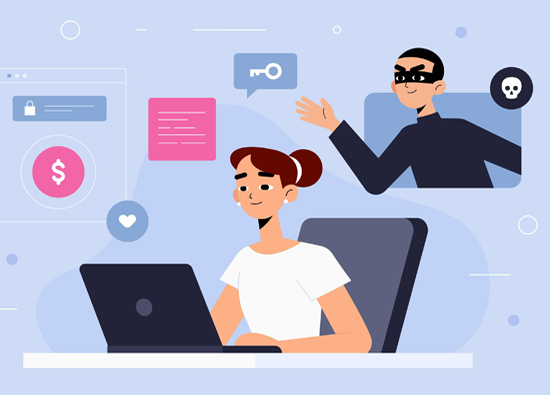
 At the end of the year and the beginning of the year, many people are busy arranging New Year gatherings, arranging travel and booking rooms, and preparing New Year gifts, but hackers have already secretly planned to "start work". From phishing letters to fake websites, from AI scams to system vulnerabilities, these seemingly ordinary life situations often conceal security traps, and a slight lack of attention may cause the holiday season to change course. In this issue of 'Information Network', we will take you on a comprehensive review of cybersecurity to help you establish a solid digital defense line.
Holiday Fishing Letter: Hackers' Favorite 'New Year's Card'
Before and after the Spring Festival, email and group messages are always lively, with various festive discounts, promotions, and New Year greetings constantly emerging. However, this is also the most active season for hackers. We have analyzed the social engineering evolution of phishing letters, and the attack methods are no longer just crude fake pages, but using AI technology to automatically generate letter content with a natural tone, even attaching real brand logos and customer service signatures. After the recipient clicks on it, it may not only lead to fake websites, but also automatically download malicious programs, thereby stealing account or credit card information. Don't forget, 'looking real' doesn't mean it's really safe.
Tip 1 for cybersecurity tips: Before receiving a discount or blessing link, check if the sender and website are abnormal. If it is difficult to distinguish authenticity, contact the official customer service directly. Better miss than fall into a trap.
AI Deepfake fraud: Voice can also be replicated
AI generation technology will fully explode in 2025 and become a new tool for fraudsters. In 2024, in a column on the Information Network, it was shared that hackers used AI technology to virtually generate the voice and image of their superiors, and through voice calls or video conferences, requested subordinates to "urgently transfer funds". Employees were not suspicious of him due to his familiar appearance, tone, and language, and quickly transferred huge amounts of money. Even more astonishing is that this type of 'acquaintance trap' fraud does not require advanced technology, only a few recordings can generate an AI model.
Security Tip 2: When hearing a boss or family member request a transfer, unlock, or provide an account, be sure to confirm again through the "second channel".
Travel booking trap: Fake websites are more realistic than genuine ones
Fake shopping websites, fake government websites, and fake ticket booking websites are rampant, and now there are even "fake travel and accommodation websites". Hackers will imitate well-known booking platforms, including page design, comment sections, and credit card payment interfaces, which look almost identical to real websites. Many people enter their card numbers and only discover the next day that they have been charged, but have not completed any bookings. Due to people's tendency to relax their vigilance before holidays, coupled with the psychological pressure of "limited time discounts" or "last room", scams are not uncommon.
Security Tip 3: Whether it's Agoda, Booking.com, or Airbnb, the safest way is to log in from the official app or portal. Before entering the website, check if the URL starts with 'https' and if the domain spelling is correct. Even a small letter difference can be the opening of a trap.
Construction defense line: Updating is more important than blessings
After the holiday ends and work resumes, many people are busy dealing with the backlog of emails and messages as soon as they turn on their computers. However, it is actually necessary to take some time to hold a "security start ceremony" to check if they share the same password with other external websites? Has multiple factor authentication been enabled? Is the antivirus software still functioning properly? These seemingly subtle checks can often play a protective role at critical moments.
According to data released in January 2025, Taiwan's official internet service network will experience an average of 2.4 million daily cyber attacks in 2024, more than doubling from the previous year. This indicates that the overall security threat continues to escalate, and the frequency and methods of attacks are becoming more varied. After long holidays, hackers often try to invade accounts or test passwords while people are just recovering and less alert. Although most system updates and patches are silently completed by the IT team, password and account security still require everyone to pay more attention.
Security Tip 4: Before starting work, perform a security check on your account, including changing passwords, enabling multi factor authentication, and updating antivirus software.
Security does not have annual leave
Looking back at 2025, the Information Network column has introduced many real-life cybersecurity incidents: from weak password reminders, fake official website scams, to generative AI fraud, hoping to integrate cybersecurity concepts into our daily lives. Entering 2026, hackers' methods will only be faster, more realistic, and harder to distinguish, but as long as they "verify everything more", "avoid suspicious links", and "protect login information", they will be more secure than most people. After all, with the advancement of technology, human calmness and judgment remain the strongest firewall. In the new year, let's start with daily small actions, safeguard digital security, and welcome every day with peace of mind.
*Image source: freepik
#