
02.2026 Life Guide
Global Financial Market Outlook for 2026
Far Eastern International Bank / Jiang Zhihao

 2025 is a thrilling roller coaster for global investors. From the shadow of the trade war, inflationary pressures, to severe market volatility, the investment atmosphere can be said to be the most turbulent year since the pandemic. Looking ahead to 2026, although the global economy is expected to emerge from a period of high volatility, there are still many turning points.
1、 Review of 2025: From the Shock of Liberation Day to the Rise of Confidence
On April 2, 2025, President Trump of the United States announced that he would comprehensively raise tariffs on major trading partners, and described this policy turn as "Liberation Day". As soon as the news came out, the US stock market fell sharply, the US dollar strengthened, and the Asian currency and euro fluctuated violently... Risk aversion sentiment once spread globally. In just a few weeks, investor confidence froze, and funds quickly flowed into safe haven assets such as US bonds and gold. Many people are concerned that the world may once again fall into a 'tariff version of the financial crisis'?
However, as major economies such as the European Union, Japan, and China continue to negotiate, tensions are gradually easing. In the middle of the year, several phased agreements were reached one after another, market confidence stabilized, and the stock market rebounded from the bottom. This roller coaster like oscillation has once again made investors realize that 'policy' remains the most critical variable in global financial markets.
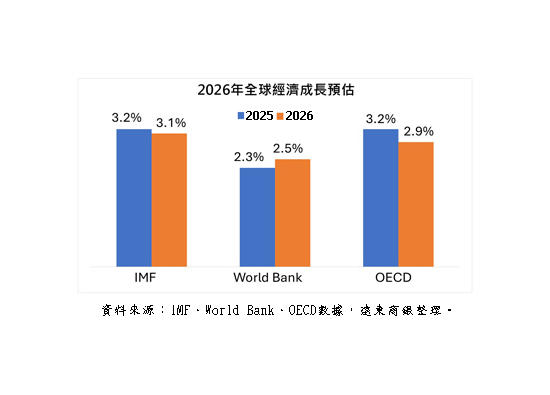
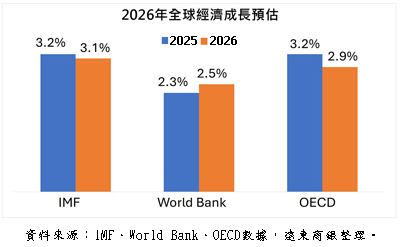
Overall, the global economy will present a pattern of "slow growth and regional differentiation" by 2025. Mature markets such as the United States and Europe have stable economies, while emerging markets are relatively weak due to inflation, trade frictions, and capital outflows. According to the International Monetary Fund (IMF), the global economic growth rate is expected to be around 3.2% by 2025; The World Bank's estimate is relatively conservative, at around 2.3%. The gap between the two reflects that policy adjustments and technology investment enthusiasm in various countries are driving the pace of global growth.
2、 2026 Outlook: Moderate Recovery, but Risks Remain High
Looking ahead to 2026, with the expected easing of tariff policies, the global market is expected to emerge from the high volatility period of 2025. Most international institutions expect a "moderate recovery" in the global economy, but the recovery is uneven. The IMF estimates that the global economic growth rate will be around 3.1% in 2026, with the OECD slightly lower at 2.9%. The World Bank is more cautious, believing that the growth rate will only be 2.5%. Overall, mature markets are growing at 1.5-1.6%, while emerging markets are maintaining around 4%, indicating that Asia and Latin America still have domestic demand support.
The road to recovery is not smooth, the high interest rate environment has not yet ended, the willingness of enterprises to invest is low, and policy uncertainty remains high. The OECD reminds that due to tariff fluctuations in 2025, many companies are stocking up and purchasing in advance, resulting in short-term data being high and suppressing investment momentum in 2026. The World Bank also pointed out that if major countries fail to further stabilize the trade order, growth momentum may be further dragged down. In addition, the cost of climate policy transition, energy price fluctuations, and geopolitical risks may still bring potential pressures. Overall, 2026 will be a year of "moderate recovery but high uncertainty" as the global economy struggles to find balance amidst uncertainty.
3、 Analysis of major economies
1. United States: AI investment supports economic resilience
The United States remains the main engine of the global economy, despite sustained high interest rates and policy controversies, domestic demand and the job market remain robust. Consumer spending remains high, and the investment boom in AI and technology related industries is driving enterprise productivity. Chip design, cloud computing, and data centers have become investment focuses, and AI applications have penetrated into various industries.
The IMF estimates that the US economy will grow at a rate of approximately 2.1% in 2026, leading among major mature economies. If AI investment continues to drive productivity, the United States still has the opportunity to play a stabilizing role in global recovery. However, it should be noted that high inflation and policy changes may limit future room for easing, affecting corporate investment confidence.
2. Europe and Japan: Structural issues slow down growth
The European economy is still affected by high inflation and fluctuations in energy prices, resulting in insufficient export and manufacturing momentum. Although green energy and industrial upgrading are long-term opportunities, the short-term increase in corporate costs has limited investment willingness. The IMF predicts that the Eurozone's growth rate in 2026 will only be about 1.1%. On the Japanese side, the depreciation of the yen has brought about a recovery in exports and tourism, but population aging and labor shortages remain structural problems. It is expected that the growth rate in 2026 will be about 0.6% to 1.1%, lower than the global average.
3. China: Slowing growth, policy direction is key
The Chinese economy will remain stable in 2025, but the weak real estate market, aging population, and overcapacity issues still need to be resolved. The IMF predicts that the growth rate in 2026 will slow down from 4.8-4.9% in 2025 to 4.2-4.4%. Although the government continues to introduce stimulus policies and technology investment plans, the recovery of market confidence is slow. The pace of China's policies will be the focus of global investors' attention in 2026. If infrastructure construction and consumption stimulus are strengthened, the global supply chain and raw material market are expected to quickly recover; On the contrary, if the recovery of domestic demand is slow, it will slow down the growth of global trade.
4. India: The Growth Engine of the Emerging World
Among major economies, India has the greatest growth potential. The IMF estimates that India's growth rate in 2026 will be around 6.2%, slightly lower than the previous year but still significantly higher than the global average. India, with its huge demographic dividend, manufacturing expansion, and digitalization policies, has attracted international capital inflows and become the biggest beneficiary of supply chain restructuring. If it can continue to promote infrastructure and labor market reforms, it will have the opportunity to maintain high growth momentum in the long run.
5. Emerging markets: showing polarization
Emerging markets will continue to differentiate, with some Southeast Asian countries benefiting from supply chain transfer and electronic industry exports, showing impressive performance; Latin America is constrained by debt and inflationary pressures; Africa and the Middle East are highly dependent on raw material prices. Overall, policy stability and fiscal health will be key indicators of emerging market performance.
4、 2026 investment direction: both offensive and defensive, selectively taking risks
1. Overall environment: low-speed growth, highly uncertain
Although the global economy has not declined, it has entered a stage of "slow growth and high uncertainty". Technology investment AI、 Automation and green energy infrastructure remain the main market forces, while tariffs, geopolitics, and capital costs will continue to interfere with corporate decision-making. In this context, Far Eastern International Bank suggests that investment strategies revolve around three principles:
Seeking Defense in Growth: Choose an industry that combines growth and stable cash flow.
Profit takes priority over price: value stable returns rather than short-term price differentials.
Selective risk-taking: Focus on structural trends and avoid excessive speculation.
2. Stocks: Focusing on the dual axes of technology and defense
AI、 Semiconductors, cloud services, medical technology, and green energy infrastructure are long-term themes. In terms of investment regions, the United States and Taiwan have advantages in technology manufacturing and AI ecosystem, Japan benefits from the weakening of the yen and corporate reform, and India is worth paying attention to due to population and domestic demand support. The strategic recommendation is to adopt a "core stability+growth enhancement" configuration, which locks in technology growth stocks on the one hand, while retaining defensive assets such as utilities and healthcare to reduce volatility risks.
3. Bonds: Return on returns, emphasis on quality
After reaching its peak in 2025, interest rates may enter a gradual phase of interest rate cuts in 2026, and long-term bonds and high-quality corporate bonds have the potential for stable returns. US Treasury bonds can serve as a core safe haven allocation due to their attractive yields; The recommendation for investment grade bonds is neutral to high; Emerging market bonds and high-yield bonds are only suitable for small allocation due to their high risk.
4. Exchange rate: Neutral US dollar, attractive Japanese yen as a safe haven
Under the dual influence of trade and interest rates, the US dollar may maintain a volatile consolidation in 2026. If the US economy continues to strengthen, the US dollar remains resilient; If the Federal Reserve System accelerates interest rate cuts, the US dollar may fall. As for the euro, it is constrained by a weak economy and has limited room for appreciation; The Japanese yen is expected to rebound under the normalization of policies by the Bank of Japan, making it suitable for some safe haven configurations.
5、 Conclusion: Seeking progress while maintaining stability is the key to 2026
In 2025, global investors will once again witness the impact of policy forces. The market turbulence will gradually subside in 2026, but it is still full of unknowns. AI technology and green transformation will be the new engines of the global economy, while policy transparency and corporate investment confidence will determine the depth of recovery. It is recommended that investors approach the new year with a mindset of "seeking progress while maintaining stability and balancing offense and defense", seeking opportunities in technological growth and strategically positioning themselves in defensive configurations. After all, in the ever-changing global environment, 'stability' is the best way forward.
#