
04.2026 Life Guide
Five rules for fund allocation in turbulent times
Far Eastern International Bank / Huang Zuqi

.jpg) Have you noticed that the investment topics around you have quietly changed recently? Previously, people discussed "Which stock will rise?" and "Will geopolitics affect semiconductors; But now, more and more people are starting to ask, "Where should the funds be temporarily parked?" and "Is the interest rate on your delivery account more than 1%?" These changes are not difficult to understand. When global interest rate policies fluctuate and the industrial cycle shortens, the investment environment has shown a state of "high volatility and broken rhythm". At this time, the outcome not only depends on when to enter, but also on how to arrange the funds when exiting and observing. Far Eastern International Bank Bankee community bank has summarized the "five major fund allocation rules" based on frontline data observation, providing investors with reference.
Have you noticed that the investment topics around you have quietly changed recently? Previously, people discussed "Which stock will rise?" and "Will geopolitics affect semiconductors; But now, more and more people are starting to ask, "Where should the funds be temporarily parked?" and "Is the interest rate on your delivery account more than 1%?" These changes are not difficult to understand. When global interest rate policies fluctuate and the industrial cycle shortens, the investment environment has shown a state of "high volatility and broken rhythm". At this time, the outcome not only depends on when to enter, but also on how to arrange the funds when exiting and observing. Far Eastern International Bank Bankee community bank has summarized the "five major fund allocation rules" based on frontline data observation, providing investors with reference.Rule 1: The flow of funds is no longer a seesaw, and accounts become scheduling nodes
 The traditional concept holds that the stock market and deposits are like a seesaw: when the market is good, money enters the stock market; Poor market conditions, money is returned to the bank for safe haven. However, Far Eastern International Bank Bankee community bank observed from the actual flow of funds that when there is a significant correction in the market, some active deposits actually decrease synchronously, and the larger the correction, the more obvious the short-term outflow situation; Waiting for the market to stabilize slightly before funds flow back in batches shows that the funds of the high asset group are not simply "hedging", but are looking for more efficient relay stations.
In other words, the role of the account has shifted from being a "safe haven after exit" to a "dispatch node" during fund rotation. The more volatile the market, the higher the frequency of funds entering and leaving the account, and the usability of the account directly affects the overall operational flexibility. Many investors have begun to value the strategic position of the account.
Rule 2: Actuarial "financial static friction" to eliminate value evaporation during waiting periods
When it comes to risk, most people first think of the price fluctuations of "how much the stock has fallen", but there is also a more often overlooked hidden risk - in high volatility markets, the "non investment state" after selling assets may last for weeks or even months. If funds can only lie in delivery accounts with interest rates close to zero, it is equivalent to losing a lot of opportunity costs.
Imagine a fund of tens of millions, temporarily stored in a general stock delivery account due to market instability, with almost no returns; But if placed in an efficient Youli active deposit account, the generated interest may be enough to pay for a family trip. From this, it can be seen that the real erosion of investment results is not necessarily a sharp drop, but rather the efficiency wasted during the period of fund parking.
Rule 3: Break the "high profit equals lock in" framework and pursue ultimate liquidity
Many investors are most concerned about the three core factors when choosing an account: "ready to use, sustained returns, and minimal restrictions". However, in the past, high interest deposits in banks often had limitations on the number of days, upper limits on the amount, or cumbersome withdrawal conditions. For investors who need to capture market entry points at any time, this is undoubtedly another type of restriction.
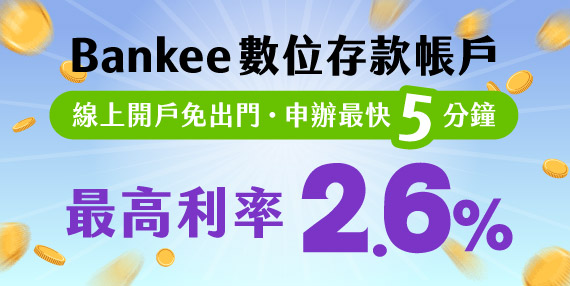
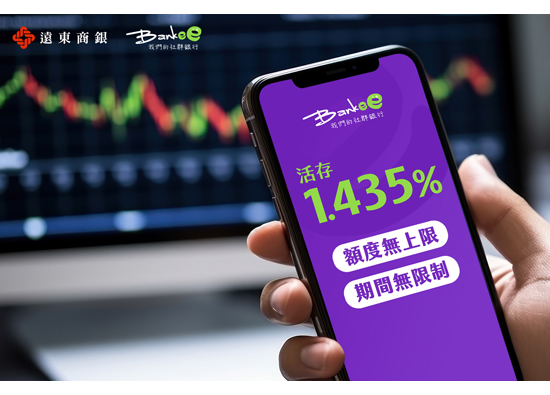
Far Eastern International Bank Bankee community bank breaks the existing framework by offering 1.435% premium live deposits with no upper limit on deposit amounts, allowing funds to act like soldiers on standby, both ready to strike and steadily accumulating interest. For example, a couple holding NTD 20 million funds can accumulate over NTD 20000 interest through a 1.435% interest rate during a 30 day market observation period. In this way, no matter when they enter the market, they can continue to accumulate assets.
Rule 4: Aim for the "non trading day" interest margin and create big benefits with small actions
Another undisclosed secret of the high asset group is the ultimate use of weekends and holidays. Ordinary people usually put large amounts of funds in securities delivery accounts with extremely low interest rates on weekdays, but experts will transfer the funds back to high interest active deposit accounts on weekends or before consecutive holidays.
Calculating based on approximately 180 non trading days in a year, keeping NTD 20 million funds continuously in a delivery account with an interest rate of about 0.03% will result in a six-month interest of only about NTD 3000; But if transferred to Far Eastern International Bank Bankee community bank active deposit on Friday, the accumulated interest during the same period can exceed NTD 140000. The difference of up to NTD 138000 only comes from a simple transfer action, which is also the detail of investment experts maintaining compound interest momentum.
Rule 5: Further evolve debt management to make expenses more efficient
When considering the role of an account, not only assets but also liabilities are equally important. Many investors are accustomed to using loans for asset allocation, and what they truly care about is how much interest they actually pay.
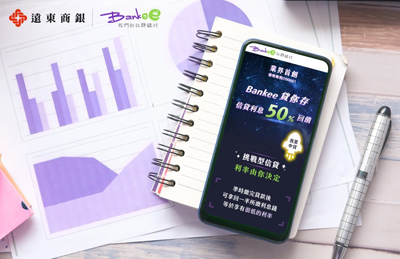
Far Eastern International Bank's "Challenge Credit" policy stipulates that borrowers who meet the conditions can receive back half of the interest paid. Assuming an annual interest rate of 4%, the actual interest rate returned by the bank is only about 2%. Based on NTD 7 million and a 7-year trial, compared to other banks' plans, the overall interest difference exceeds NTD 140000. This not only significantly reduces the actual borrowing cost, but also provides investors with stronger support and flexibility in their cash flow.
Your account is the foundation for investment
In an era of upheaval, investors' composure is often not only due to more accurate predictions, but also because every penny of capital is properly and effectively allocated. When an account can simultaneously receive investment funds, daily cash flow, and even manage payment rhythm (such as the "slow payment mechanism" that delays credit card payments by 60 days), it is no longer just a storage point, but the most important defense line for risk management.
In the new year, re-examine your account selection to ensure that funds have the most suitable location in any state, which may be your most practical and cost-effective investment strategy in 2026.
#